Are you Health Professional?
Register now, join the community for free access.
GET ALL THE BENEFITS THAT MEDTUBE PLATFORM OFFERS:
- Unlimited access to the largest e-library of professional videos, images, publications, courses
- Connect with peers 450,000+ Healthcare Professionals from 180 countries
- Upload and share your own cases, ask questions and discuss
- Create your professional profile and build personal recognition worldwide
- Stay up-to-date with innovative techniques, treatments, guidelines, discoveries in your fields of interest; be notified
- You are informed about innovative treatments, techniques and innovations in medicine

When One Scope Reveals Three Diagnoses

Case description
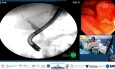
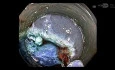
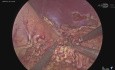
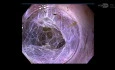
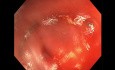
Clinical case: when one scope reveals three diagnoses. A 38-year-old woman. Acute pancreatitis grade A, with acute cholangitis and lower CBD stone on MRCP. On CT, there was also an asymptomatic ileal intussusception. Sent for ERCP. But endoscopy told a much bigger story. Entering the duodenum, the mucosa stopped me - scalloped folds, fissuring, mosaic pattern.Classic signs of coeliac disease. Minimize then the papilla: bulky, obstructed. Cannulation with a guidewire on sphincterotome. Contrast injection revealed a defect in the lower CBD. Sphincterotomy performed. Bile and small debris cleared. Duodenal biopsies taken. Three findings. One unifying diagnosis.
The Connection Coeliac disease can cause:
→ Papillary stenosis → ductal obstruction → acute pancreatitis
→ Lymphoid hyperplasia in the small bowel → lead point → intussusception (often transient, no surgery needed)
→ Villous atrophy visible endoscopically, even when the indication was purely biliary.
The bulky papilla wasn't idiopathic. The pancreatitis wasn't idiopathic. And the intussusception? Likely the same immune-mediated process at work in the gut wall.
Practical Pearls
• Always inspect the duodenal mucosa during ERCP — you are already there
• Biopsy both the bulb and the second portion to maximize diagnostic yield
• In adults with idiopathic pancreatitis + papillary stenosis, think coeliac
• Gluten-free diet can resolve the intussusception - no surgery, no intervention
• Exclude adenocarcinoma as a lead point, especially in adults with severe villous atrophy
Endoscopy is not just a therapeutic tool. It is a diagnostic window - if you choose to look.
This user also sharing
The Nightmare of Every GI Endoscopist
boudabbous sami
views: 3532
ERCP Gastroscope
boudabbous sami
views: 760
Prostatic Biopsy Bleeding - GI Tips
boudabbous sami
views: 1358
Recommended
Gastrointestinal Stomal Tumor
Dedy Chandra
views: 37