Are you Health Professional?
Register now, join the community for free access.
GET ALL THE BENEFITS THAT MEDTUBE PLATFORM OFFERS:
- Unlimited access to the largest e-library of professional videos, images, publications, courses
- Connect with peers 450,000+ Healthcare Professionals from 180 countries
- Upload and share your own cases, ask questions and discuss
- Create your professional profile and build personal recognition worldwide
- Stay up-to-date with innovative techniques, treatments, guidelines, discoveries in your fields of interest; be notified
- You are informed about innovative treatments, techniques and innovations in medicine

Advanced Pulmonary Neoplasia with Esophageal Compression - One Stent, Two Problems

Case description
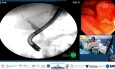
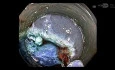
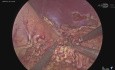
REVISED ON-THE-SPOT STRATEGY: "ONE-STENT, TWO-PROBLEMS". Advanced pulmonary neoplasia with esophageal compression.
The pre-procedure plan was conservative (stent the thoracic stricture only).
Revised On-the-Spot Strategy: "One-Stent, Two-Problems"
Core Principle: The contrast study has provided the evidence you lacked. You must now definitively treat both obstructions with this single stent placement to avoid an imminent second procedure.
Immediate intra-procedural adjustments.
1. Re-Map & Re-Measure Under Fluoro.
Pause the procedure. Do not deploy the thoracic stent yet. Your new landmarks are now on the fluoro screen: Proximal Margin: Your pre-placed "double-dot" markers. Distal Margin: The point where contrast finally trickles into the stomach - this is the functional endpoint of the cardia stricture. Critical Action: Using the fluoro ruler, measure the total distance from your proximal markers to this new distal contrast point. This is your true obstructed segment length.
2. Change Your Stent Selection (If Possible).
If you have not yet opened the stent, switch to a longer one. New Stent Length Required: (New total obstructed length) + 7-8 cm.+2 cm proximal to the upper clips.+2-3 cm distal to the contrast point, into the stomach. Why Longer? You must bridge the GEJ with an adequate intra-gastric segment (2-3 cm) to minimize the risk of the distal end sitting at the tight cardia and acting as a fulcrum for migration.
3. Deploy to Cover the New Anatomy.
Deploy the stent so its proximal end is well above your proximal clips. Ensure the distal end deploys fully in the stomach, well beyond the point of contrast hold-up. Watch under live fluoro as the stent expands across the cardia.
4. Fixation is Now ABSOLUTELY MANDATORY.
The rationale for fixation just became infinitely stronger. You are now placing a long stent across the GEJ for a functional disorder, which has the highest migration risk profile. Execute robust fixation: Use ≥3 clips on the proximal flange. If available, consider an Over-The-Scope-Clip (OTSC) for a stronger anchor, though TTS clips are sufficient. Tips & Tricks for This Specific Scenario
The "Contrast-Guided" Landmark: The contrast column is your best friend. The transition from a dilated, contrast-filled esophagus to the pinched, non-opacified cardia is your target. Deploy the stent's distal radiopaque marker 3-4 cm below this transition point.Beware of "Stacking": If you already deployed a stent for the thoracic stricture before injecting contrast, you are in a tougher spot. Your options are: Remove it (if fully covered and freshly placed) and place one long stent.Place a second, overlapping stent from the distal end of the first stent, across the cardia into the stomach. You must fixate both stents together at the overlap. Post-Stent Contrast Check (Optional but Wise): After deployment and fixation, re-inject a small amount of contrast to confirm free flow into the stomach. This is your quality control.Communicate the Finding: Document clearly: "Intra-procedure contrast esophagram revealed unexpected functional obstruction at the cardia, necessitating extension of stent coverage across the gastroesophageal junction."Post-Procedure & Cost-Conscious Management (Unchanged but More Vital)
The discovery of the cardia stricture makes your post-op management protocol even more critical to prevent readmission.
Medical Regimen (Start Immediately): Double-dose PPI IV now, then PO BID. Alginate suspension scheduled after meals and at bedtime. Consider a prokinetic (e.g., low-dose erythromycin) for 3-5 days to encourage gastric emptying, though evidence is weak. Dietary Counseling (Non-negotiable): "Your new stent acts as a direct pipe to your stomach. You must eat pureed/soft foods, chew liquids, and never lie down after eating. Scheduled Follow-up: A planned phone call in 48-72 hours is crucial to manage early reflux and dietary adherence. The Revised "Bottoms-Line" Algorithm for Intra-Procedure Discovery.
STOP & REASSESS. Use contrast to define the new distal margin. RE-MEASURE. Calculate the new required stent length (Obstructed Length + 5 cm).COVER ALL. Deploy a single stent from normal esophagus above, well into the stomach below.FIX IT. Apply proximal clip fixation as a mandatory step. MEDICATE & EDUCATE. Aggressively manage reflux and diet from minute one.
Conclusion:
The intra-procedure contrast study has done you a favor - it prevented a failed, incomplete procedure. It mandates a more aggressive but definitive tactic. By adjusting your plan in real-time to cover the entire dysfunctional segment and secure the stent, you achieve the original cost-containment goal: maximizing the chance of sustained palliation with a single intervention.
This user also sharing

The Nightmare of Every GI Endoscopist
boudabbous sami
views: 3538
ERCP Gastroscope
boudabbous sami
views: 763
Prostatic Biopsy Bleeding - GI Tips
boudabbous sami
views: 1360
Recommended
Gastrointestinal Stomal Tumor
Dedy Chandra
views: 41