Are you Health Professional?
Register now, join the community for free access.
GET ALL THE BENEFITS THAT MEDTUBE PLATFORM OFFERS:
- Unlimited access to the largest e-library of professional videos, images, publications, courses
- Connect with peers 450,000+ Healthcare Professionals from 180 countries
- Upload and share your own cases, ask questions and discuss
- Create your professional profile and build personal recognition worldwide
- Stay up-to-date with innovative techniques, treatments, guidelines, discoveries in your fields of interest; be notified
- You are informed about innovative treatments, techniques and innovations in medicine

Dual-modality Approach To Active Post-polypectomy Bleeding Control

Case description
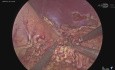
Dual-modality approach to active post-polypectomy bleeding control: single-device hemostasis using snare-tip soft coagulation with saline-immersion.
The Clinical Challenge.
Post-polypectomy bleeding (PPB) remains the most common adverse event following endoscopic mucosal resection (EMR), with incidence ranging from 1–6% for standard polyps and up to 10–15% for large lesions (>20 mm). While delayed bleeding (24 hours–30 days) has been extensively studied, immediate intra-procedural bleeding presents a distinct challenge: the endoscopist must achieve rapid hemostasis while preserving visibility and minimizing the risk of deep thermal injury particularly in the thin-walled right colon.
Traditional approaches include mechanical clips, injection therapy, and thermal coagulation.
Each has limitations:
Clips: May obscure the field, fall off, or be impractical for diffuseoozingInjection: Temporary effect, may impair subsequent coagulation
Standard thermal coagulation: Risk of deep injury, carbonization, and perforation
Device exchanges: Time-consuming, costly, and technically cumbersome during active bleeding
A dual-modality, single-device protocol refined in my practice that addresses all these limitations using one tool already in hand: the polypectomy snare.
The Core Advantage: One Device, Two Techniques.
The fundamental innovation of this approach is hemostasis without device exchange. The polypectomy snare already deployed for resection - becomes a multi-functional instrument:
Why this matters?
⏱️ No time lost to device withdrawal, selection, and reinsertion during active bleeding.
This user also sharing

The Nightmare of Every GI Endoscopist
boudabbous sami
views: 3641

ERCP Gastroscope
boudabbous sami
views: 794


Prostatic Biopsy Bleeding - GI Tips
boudabbous sami
views: 1427
Recommended
Gastrointestinal Stomal Tumor
Dedy Chandra
views: 112