ent cases


Kiesselbach's Plexus
Sometimes the vessels in Kiesselbach's Plexus may become quite large and, by virtue of their superficial location susceptible to damage from the most minimal trauma. The result is frequent spontaneous...

Little's Area Of The Anterior Nasal Septum
A highly vascular region, Kiesselbach' s Plexus of vessels arises in Little' s area of the nasal septum. Kiesselbach' s Plexus is the area of termination of the major blood vessels of this area: the anterior...

Active Epistaxis
Nosebleeds [epistaxis] are extremely common and usually minor. The majority of nosebleeds originate from the anterior nasal septum in the region known as Little's area.

Anteriorly Bent Uncinate Process
In some patients, the uncinate process may be rotated almost 180° so that it posterior border faces anteriorly. When the uncinate process is also enlarged as in this patient, the middle turbinate...

Enlarged and Medially Rotated Uncinate Process
In this patient with a left maxillary sinus mucocele, the left uncinate process is grossly enlarged and rotated medially so that it lies at right angle to the long axis of the nasal cavity. The uncinate...

Medially Bent Uncinate Process
While the normal uncinate process lies posteriorly parallel to the lateral nasal wall, there are several variations in this anatomical orientation. In this patient, the right uncinate process is medially...

Enlarged Posterior end of a Right Inferior Turbinate
The hypertrophied posterior end of an inferior turbinate may obstruct the choana the such an extent that severe nasal obstruction results. Note the "mulberry" hypertrophy of the posterior end...
![Enlarged Inferior Turbinate 2 [after decongestant application]](https://medtube.net/images/min/1dfabd2bec2e4ecf712d57e72aba15fa/149/112/1 "Enlarged Inferior Turbinate 2 [after decongestant application]")
Enlarged Inferior Turbinate 2 [after decongestant...
This is a genuinely enlarged left inferior turbinate seen after the application of a topical nasal decongestant.
![Enlarged Inferior Turbinate 1 [before decongestant application]](https://medtube.net/images/min/11607578eed80b219ce4cac092583d1d/149/112/1 "Enlarged Inferior Turbinate 1 [before decongestant application]")
Enlarged Inferior Turbinate 1 [before decongestant...
Enlargement of the inferior turbinate is a common cause of nasal obstruction. In most cases, the apparent enlargement is primarily due to vasodilatation of the submucosal erectile tissue. Dilatation of...

Enlarged Ethmoidal Bulla
The ethmoidal bulla may be grossly enlarged. In this patient, the right uncinate process is both medially rotated and enlarged. The enlarged ethmoidal bulla can be seen behind the medial and of the uncinate...

Small Nasal Septal Perforation Post Septoplasty
This patient developed a small asymptomatic nasal septal perforation after a septoplasty. Generally speaking small nasal septal perforations do not crust as we see with large nasal septal perforations.
![The Uncinate Process [Skeletal Specimen]](https://medtube.net/images/min/fef48b371c4bf9a142ccbee2b63a838c/149/112/1 "The Uncinate Process [Skeletal Specimen]")
The Uncinate Process [Skeletal Specimen]
This right skeletal specimen clearly shows the uncinate process. The infundibulum is the air-containing space that is bounded by the uncinate process medially, the lamina papyracea laterally and the ethmoidal...
![Normal UncinateProcess [right]](https://medtube.net/images/min/00a68a1088bd55cbdb3431557aebf08d/149/112/1 "Normal UncinateProcess [right]")
Normal UncinateProcess [right]
In the ethmoid bone, a sickle shaped projection, the uncinate process, projects posteroinferiorly from the medial surface of the ethmoid bone. Between the posterior edge of this process and the anterior...

Large Concha Bullosa
This is a large aerated right middle turbinate [concha bullosa] which is interfering with airflow through the right nasal cavity.

Postoperative Synechia Left Middle Meatus
A moderately large scar [synechia] has developed between the lateral surface of the middle turbinate and the lateral nasal wall. A synechia of this size is likely to cause symptoms of airway obstruction.


Users
-

Michael Hawke
Professor
-

Rahmat Omar
MD
-

-

-

Channels
-

Gastroenterology Atlas
medical institution
-

ENT Academy
commercial institution
-

Royal Pearl Hospital
medical institution
-

Department of Otolaryngology - Medical University of Warsaw
medical institution
-

High Impact - Medical Animation
medical institution
Popular
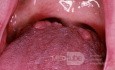
Prominent Circumvallate Papillae
Michael Hawke
views: 231035
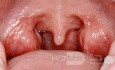
Normal Tonsils
Michael Hawke
views: 64517
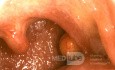
Benign Mucous Cyst Tonsil
Michael Hawke
views: 42020
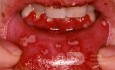
Herpetic Gingivostomatitis
Michael Hawke
views: 32848
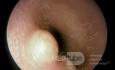
Epidermal Cyst External Ear Canal
Michael Hawke
views: 25762
Recently active users
-
Roberta Noer Pilla
MD, PhD.
-

-

Dr. Muhammad Sherwani
MD, PhD.
-
Rahul Mahato
MD
-
Michael Hawke
Professor

Are you Health Professional?
Register now, join the community for free access.
GET ALL THE BENEFITS THAT MEDTUBE PLATFORM OFFERS:
- Unlimited access to the largest e-library of professional videos, images, publications, courses
- Connect with peers 450,000+ Healthcare Professionals from 180 countries
- Upload and share your own cases, ask questions and discuss
- Create your professional profile and build personal recognition worldwide
- Stay up-to-date with innovative techniques, treatments, guidelines, discoveries in your fields of interest; be notified
- You are informed about innovative treatments, techniques and innovations in medicine