Are you Health Professional?
Register now, join the community for free access.
GET ALL THE BENEFITS THAT MEDTUBE PLATFORM OFFERS:
- Unlimited access to the largest e-library of professional videos, images, publications, courses
- Connect with peers 450,000+ Healthcare Professionals from 180 countries
- Upload and share your own cases, ask questions and discuss
- Create your professional profile and build personal recognition worldwide
- Stay up-to-date with innovative techniques, treatments, guidelines, discoveries in your fields of interest; be notified
- You are informed about innovative treatments, techniques and innovations in medicine

The Parasite was Already Trying to Escape. We Helped it Along.

Case description
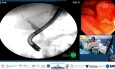
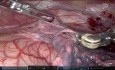
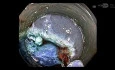
The hydatid membrane was at the papilla before the sphincterotome arrived. No contrast. No cholangiogram. The parasite was already delivering its own diagnosis. Today at Clinique Les Oliviers: general anaesthesia, acute severe cholangitis, a 10 cm infected hepatic hydatid cyst on CT. Surgical team on standby. We went to the ERCP suite first. The wire entered the bile duct. Immediately: hydatid membrane obstructing the papilla from within, prolapsing outward under biliary pressure. White, laminated, unmistakeable. The cyst had already ruptured into the biliary tree and the membrane was the doorbell. We did not inject contrast. There was nothing to clarify. We acted.
THE EXACT SEQUENCE
① Wire cannulation — no contrast. Hydatid membrane immediately at the papilla, prolapsing under pressure. Cystobiliary communication self-evident.
② Large sphincterotomy performed immediately — to open the outflow channel and begin decompression of the biliary tree and cyst simultaneously.
③ Maximum evacuation of cyst contents through the sphincterotomy — hydatid membranes, daughter cysts, infected bile and hydatid sand cleared progressively. System depressurised.
④ Contrast injected — now safe. On a decompressed, depressurised system. Cholangiogram confirms cystobiliary fistula, maps the anatomy, and informs the decision to proceed with balloon dilation. ⑤ EPLBD to 13 mm — performed with full anatomical knowledge from the cholangiogram. Papilla transformed into a formal extraction channel for remaining solid hydatid material.
⑥ Further extraction of residual daughter cysts and membrane fragments through the dilated papilla.
⑦ Hypertonic saline irrigation of the cyst cavity via the sphincterotome — scolicidal wash delivered directly into the fistula tract.
⑧ 2 double pigtail stents deployed transpapillary into the cyst cavity. ⑨ Stent pusher sheath repurposed as irrigation catheter — larger diameter used for a second forceful hypertonic saline wash around the deployed pigtails, clearing residual debris before the final stent. ⑩ 1 straight stent placed. 3 stents total. Internal drainage of the cyst cavity secured.
WHY CONTRAST AT STEP 4, NOT STEP 1
Injecting contrast into a pressurised, infected biliary system in Grade III cholangitis forces volume into an obstructed septic tree — pressure spike, bacteraemia, risk of septic shock. The Tokyo Guidelines and ESGE are explicit: decompress first. Contrast after. Here we decompressed through sphincterotomy and initial evacuation, then injected contrast safely — using it not to make the diagnosis (the membrane had done that) but to map the fistula precisely before committing to balloon dilation.
6 HOURS AFTER THE PROCEDURE
Pain: gone. Fever: gone. Patient: stable. 120 minutes is not a short procedure. It reflects the volume of work done: the evacuation of a 10 cm cavity, two irrigation passes, and three stents placed sequentially. Every minute was necessary. No minute was wasted.
THE ARGUMENT AGAINST PRIMARY SURGERY
Surgery would have required:
× Laparotomy in an acutely septic patient
× Pericystectomy or partial hepatectomy
× Formal bile duct repair for the fistula× 5–10 day hospital stay minimum
× Significant morbidity in the acute septic setting
× Risk of intraperitoneal hydatid spillage
Our endoscopic approach delivered:
✓ GA already in place — no added anaesthetic risk
✓ No incision, no liver resection
✓ Fistula stented — no acute formal repair needed
✓ Cholangitis resolved in the same session
✓ 120 minutes. Afebrile and pain-free at 6 hours.
✓ Contained extraction — no spillage risk
Surgery for complicated hydatid disease with cystobiliary fistula is valid, well-described, and sometimes unavoidable. We do not argue against it. We argue this: when the anatomy offers a natural endoscopic access route, when the team is trained to use it, and when complete decompression and evacuation can be achieved in a single session — endoscopy is not the backup plan. It is the plan. "The membrane was already at the papilla when the wire arrived. The parasite had built the door. We simply made it wider, cleaned what was behind it, and locked it open with three stents. The patient was pain-free by afternoon." No IR. No NBD. No operating theatre. One sphincterotomy, one balloon, three stents, one stent pusher sheath turned irrigation catheter, and 120 minutes of focused endoscopic work.
This user also sharing
The Nightmare of Every GI Endoscopist
boudabbous sami
views: 3532
ERCP Gastroscope
boudabbous sami
views: 759
Prostatic Biopsy Bleeding - GI Tips
boudabbous sami
views: 1358
Recommended
Gastrointestinal Stomal Tumor
Dedy Chandra
views: 37