Are you Health Professional?
Register now, join the community for free access.
GET ALL THE BENEFITS THAT MEDTUBE PLATFORM OFFERS:
- Unlimited access to the largest e-library of professional videos, images, publications, courses
- Connect with peers 450,000+ Healthcare Professionals from 180 countries
- Upload and share your own cases, ask questions and discuss
- Create your professional profile and build personal recognition worldwide
- Stay up-to-date with innovative techniques, treatments, guidelines, discoveries in your fields of interest; be notified
- You are informed about innovative treatments, techniques and innovations in medicine

5 Things That Make Post-cholecystectomy ERCP Look Easy (And 5 That Ruin It)

Case description
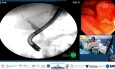
A 28-year-old woman, five days post laparoscopic cholecystectomy with a transcystic drain. Routine cholangiogram reveals CBD stones. She's referred for ERCP. What followed was a case that illustrates why mastering the fundamentals matters more than any advanced trick.
Here's what worked — and what commonly goes wrong in exactly this scenario.
The setup
3 CBD stones · Transcystic drain in situ · Same-day discharge · Zero complications
Tips & tricks that made the difference1/ Use the kissing technique for papilla exposition:
Gentle mucosal apposition between the sphincterotome and the papillary orifice — not pressure, not force. It centers the catheter tip naturally and reduces trauma before a single wire is advanced.
2/ Commit to the 11 o'clock axis — before advancing the wire
CBD orientation is not guesswork — it is anatomy. Blind but educated: the axis is set by sphincterotome angulation before contrast, before wire. Hesitation at this point is where most difficult cannulations begin.
3/ Map the duct completely before any intervention
Contrast first — always. Count the stones, assess sizes, note the most distal. In this case: 3 stones, already known from the transcystic cholangiogram. No surprises during extraction is the goal.
4/ In young patients: minimal sphincterotomy
The sphincter of Oddi is a functional barrier this patient will live with for 50+ years. A sphincterotomy adequate for stone extraction is not the same as a maximal one. Cut for the stones, not for comfort.
5/ Occlusion cholangiogram — non-negotiable
You counted 3 stones coming out. The occlusion cholangiogram confirmed the duct was clear. These are not the same thing. Never skip this step — one retained stone means a second procedure, a readmission, a complication.
Mistakes to avoid
1/ Forcing cannulation when the axis is off
Repeated unguided attempts cause edema, bleeding, and pancreatitis. If you're not in after 2–3 passes — stop, reassess axis, or consider rendezvous through the transcystic drain.
2/ Ignoring the transcystic drain as a diagnostic asset
This drain is not just decompression — it's a roadmap. A cholangiogram through it before ERCP gives you stone count, size, distal CBD anatomy, and papilla distance.
3/ Maximal sphincterotomy as default
In a young patient with small stones, a large sphincterotomy trades short-term convenience for long-term risk: duodenal reflux, recurrent cholangitis, late malignancy. Calibrate the cut to the stones.
4/ Skipping the occlusion cholangiogram
Counting stones extracted equals stones present — this logic fails when stones are hidden behind folds, in the cystic duct stump, or proximal to the sweep. Confirm radiologically, every time.
5/ Overnight admission by habit
Uncomplicated ERCP in a young, well patient with confirmed duct clearance does not require admission. Same-day discharge with clear return criteria is safe, and the right standard.
Post-cholecystectomy CBD stones are one of the most common indications we face. The procedure can feel routine — and that is exactly when complacency sets in.
Deliberate technique at every step — access, cholangiogram, sphincterotomy, extraction, confirmation — is what separates a case like this one from an unnecessary complication.
This user also sharing
The Nightmare of Every GI Endoscopist
boudabbous sami
views: 3532
ERCP Gastroscope
boudabbous sami
views: 760
Prostatic Biopsy Bleeding - GI Tips
boudabbous sami
views: 1358
Recommended
Gastrointestinal Stomal Tumor
Dedy Chandra
views: 37