Are you Health Professional?
Register now, join the community for free access.
GET ALL THE BENEFITS THAT MEDTUBE PLATFORM OFFERS:
- Unlimited access to the largest e-library of professional videos, images, publications, courses
- Connect with peers 450,000+ Healthcare Professionals from 180 countries
- Upload and share your own cases, ask questions and discuss
- Create your professional profile and build personal recognition worldwide
- Stay up-to-date with innovative techniques, treatments, guidelines, discoveries in your fields of interest; be notified
- You are informed about innovative treatments, techniques and innovations in medicine

The Deployment-Retraction Crossing Technique

Case description
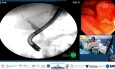
The Deployment-Retraction Crossing Technique.
I couldn't cross the left duct. Wire was in. Balloon dilation done. The delivery system wouldn't follow. Tumor-induced angulation at the confluence acute, fixed, uncrossable by conventional means. I didn't accept that.
Here's what I did. The maneuver: I positioned the delivery system 1 cm below the stricture. Started deploying the stent. The partially deployed stent more compliant than the rigid sheath followed the wire around the angle and crossed it. Then, simultaneously: I retracted the stent back into the sheath I advanced the sheath forward.At the same time. Opposite directions. The stent became a rail. The sheath rode that rail across the angulation. The system crossed. Then I deployed normally. Both ducts draining. Bilateral SEMS in place. 84-year-old man with Bismuth IV hilar cholangiocarcinoma - going home with a functioning biliary system. What makes this different from balloon dilation? Balloon dilation addresses caliber. This addresses geometry. Those are two completely different problems. A balloon opens a lumen. It cannot straighten an angle imposed by tumor mass on the ductal architecture.This technique uses the stent's own compliance its ability to flex where the sheath cannot as a mechanical tool to carry the rigid delivery system across an otherwise uncrossable curve. The stent didn't just drain the duct. It built the path to get there. I'm calling this the Deployment-Retraction Crossing Technique.
This user also sharing

The Nightmare of Every GI Endoscopist
boudabbous sami
views: 3596
ERCP Gastroscope
boudabbous sami
views: 784
Prostatic Biopsy Bleeding - GI Tips
boudabbous sami
views: 1405
Recommended
Gastrointestinal Stomal Tumor
Dedy Chandra
views: 93