Are you Health Professional?
Register now, join the community for free access.
GET ALL THE BENEFITS THAT MEDTUBE PLATFORM OFFERS:
- Unlimited access to the largest e-library of professional videos, images, publications, courses
- Connect with peers 450,000+ Healthcare Professionals from 180 countries
- Upload and share your own cases, ask questions and discuss
- Create your professional profile and build personal recognition worldwide
- Stay up-to-date with innovative techniques, treatments, guidelines, discoveries in your fields of interest; be notified
- You are informed about innovative treatments, techniques and innovations in medicine

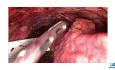
Navigating the Pyloric Border, ERCP for Choledocho-duodenal Anastomotic Stricture

Case description
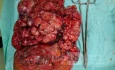
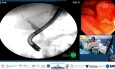
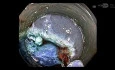
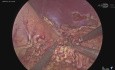
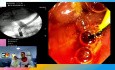
Expert management of mature CDA strictures using (brand hidden) and side-viewing pivot high-stakes cases require more than just technical skill - they require anatomical adaptability. I recently managed a challenging 75-year-old patient with acute cholangitis secondary to a fibrotic choledocho-duodenal anastomotic stricture (CDAS). The surgery was performed 1 year ago, but the anatomy was particularly difficult: the orifice was located high in the duodenal bulb, immediately post-pylorus. We used a duodenoscope, colonoscope & a gastroscope with distal cap. The flushing pump was necessary for founding the orifice, and helping for cannulation.
Here is the technical breakdown of the "Hybrid Approach" I used to achieve successful bilateral drainage: The Technical Challenge. While the device provides incredible HD imaging and a cap-assisted stable view of the bulbar stoma, pushing a 10Fr stent through a long colonoscope channel over two guidewires creates immense friction. In the acute angulation of the duodenal bulb, this "stiction" often causes the scope to prolapse into the stomach rather than advancing the stent. The 3-Phase Solution Phase 1 (The Scout): Used the HQ1100DI + Cap to identify the stoma and wire both the Left and Right Hepatic Ducts. Performed sequential 7 mm balloon dilation to prime the fibrotic stricture. Phase 2 (The Heavy Lift): Switched to a therapeutic duodenoscope. The side-viewing elevator provided the mechanical leverage needed to overcome friction and successfully deploy a 10Fr simple pigtail stent into the left duct. Phase 3 (The Finisher): Re-intubated with the colonoscope to navigate the specific acute angle of the right hepatic duct, finishing with a 7Fr pigtail stent.
Key Clinical Pearls
Don’t fight physics: If a 10Fr stent won't advance in a colonoscope, switch to the duodenoscope elevator. It's a strategic pivot, not a technical failure.
The "Short-Position" is King: In the bulb, maintaining a J-shape prevents gastric prolapse and ensures a direct vector to the stoma.
Sepsis Priority: In acute cholangitis, focus on immediate decompression with pigtail stents. The "pigtail" anchors perfectly in the high-mobility bulbar environment.
A huge thank you to the nursing team for their seamless support during this complex "scope-shuffling" procedure!.
This user also sharing
P-EMR For A 35 mm Right Colon NG-LST
boudabbous sami
views: 1352
ERCP for Hilar Malignancy
boudabbous sami
views: 483
The Nightmare of Every GI Endoscopist
boudabbous sami
views: 3490