Are you Health Professional?
Register now, join the community for free access.
GET ALL THE BENEFITS THAT MEDTUBE PLATFORM OFFERS:
- Unlimited access to the largest e-library of professional videos, images, publications, courses
- Connect with peers 450,000+ Healthcare Professionals from 180 countries
- Upload and share your own cases, ask questions and discuss
- Create your professional profile and build personal recognition worldwide
- Stay up-to-date with innovative techniques, treatments, guidelines, discoveries in your fields of interest; be notified
- You are informed about innovative treatments, techniques and innovations in medicine

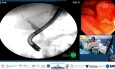
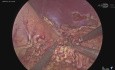
ERCP for Hilar Malignancy

Case description
Hilar Cholangiocarcinoma. Technical tips and tricks during ERCP.
Cannulation and Access.
Sphincterotomy: A limited sphincterotomy is usually performed to facilitate stent placement and exchanges.
Cholangiography: The "Less is More" Principle
· DO NOT OVER-FILL! This is the single most important trick. Inject just enough contrast to map the stricture and identify target ducts.
· Puff Technique: Use small, gentle puffs of contrast under fluoroscopy to avoid forcing contaminated contrast into undrained segments, which precipitates cholangitis.
· Once a target duct is selected, advance the wire and avoid further contrast injection.
Guidewire Manipulation and Stricture Traversal
· Choice of Wire: A hydrophilic wire is essential. A stiffer, angled-tip wire may help traverse very tight or angulated strictures.
· Use a Catheter for Support: A 5-6F catheter advanced over the wire to the level of the stricture provides stability and direction for the wire.
· Patience and Torque: Use slow, deliberate movements with torque to steer the wire. Avoid aggressive pushing, which can create false passages or perforations.
· Target the Right Duct: Use your pre-procedural MRCP as a roadmap. Aim for a duct that drains a large portion of the liver
Stent Selection and Placement
1. Type of Stent
· Uncovered Metal Stents (UMS/SEMS):Gold standard for palliative care.** They have superior patency (6-9 months) and lower rates of cholangitis compared to plastic stents. They are not removable.
· Plastic Stents (PS): Used for pre-operative drainage (as they are removable) or if life expectancy is very short (<3 months).
2. Size:
· Metal Stents: 6-8cm long, 8-10mm diameter. It's better to measure a bit longer than shorter.
· Plastic Stents: 10-12 French is the minimum; 2-3 may be placed in parallel ("stent stacking") if needed.
3. Deployment:
· For unilateral drainage place a single metal stent across the hilum into the target duct.
· For bilateral drainage: The approach is debated.
- Side-by-Side (SBS): Place two stents, one into the right and one into the left system. This can be technically challenging.
- Stent-in-Stent (SIS) / Y-Stent: Deploy one stent through the mesh of another. Easier technically but can make re-intervention more difficult.
- Trick: If placing bilateral stents, place the *more difficult* side first (usually the right system), as deploying the first stent can make accessing the contralateral system impossible
4. Post-Procedural Management
· Monitor Closely: Watch cardinal signs of cholangitis,
· Continue Antibiotics: Typically for 3-5 days post-procedure,
· Labs: Check liver enzymes and bilirubin in 24-48 hours to trend improvement.
This user also sharing

The Nightmare of Every GI Endoscopist
boudabbous sami
views: 3535


ERCP Gastroscope
boudabbous sami
views: 763

Recommended

Gastrointestinal Stomal Tumor
Dedy Chandra
views: 37