Are you Health Professional?
Register now, join the community for free access.
GET ALL THE BENEFITS THAT MEDTUBE PLATFORM OFFERS:
- Unlimited access to the largest e-library of professional videos, images, publications, courses
- Connect with peers 450,000+ Healthcare Professionals from 180 countries
- Upload and share your own cases, ask questions and discuss
- Create your professional profile and build personal recognition worldwide
- Stay up-to-date with innovative techniques, treatments, guidelines, discoveries in your fields of interest; be notified
- You are informed about innovative treatments, techniques and innovations in medicine

Esophageal SEMS Placement - Tips and Tricks

Case description
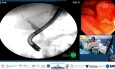
Esophageal SEMS placement. technical execution - tips and tricks during the procedure
Step 1: The Diagnostic Endoscopy
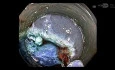
Trick: Use a thin-caliber endoscope (pediatric gastroscope or dedicated ultra-slim scope). It is more likely to pass through a tight stricture without the need for pre-dilation, significantly reducing the risk of perforation. Do NOT force the scope. If you cannot pass, your guidewire will be your guide.
Step 2: Guidewire Placement
Critical Tip: Under direct vision, advance a stiff, hydrophilic guidewire (e.g., "brand hidden") through the stricture and deep into the stomach. Confirm its position in the stomach under fluoroscopy. Never lose wire access. This is your lifeline.
Step 3: Stricture Dilation - The "When and How"
General Rule: AVOID pre-dilation if at all possible. Modern stent delivery systems are low-profile (10-11Fr). Forcing a dilated stent through a freshly dilated, friable tumor is a key cause of perforation and bleeding. Exception: If the stricture is so tight that the delivery system won't pass, perform minimal, cautious dilation. Use a small-diameter (6-8mm) balloon dilator or Savary-Gilliard dilators over the wire. Dilate just enough to allow the stent delivery system to pass. Do not dilate to the full stent diameter.
Step 4: Stent Deployment - The Crucial Moment
Use Fluoroscopy Liberally: The entire deployment must be done under continuous fluoroscopic guidance. Landmarking: Position the delivery system so the stent spans the entire stricture, with ample margin (~2cm) in normal tissue proximally and distally. Use radiopaque markers: Place skin markers (e.g., paperclips taped to the skin) at the top and bottom of the stricture under fluoroscopy before inserting the stent system. Alternatively, use endoscopic clips to mark the proximal and distal ends of the tumor, though these can be difficult to see. Deployment Technique: Deploy slowly and methodically. Most modern stents are deployed by pulling a string that unsheaths the stent from the distal end first.
Trick for Precise Proximal Placement: As the stent begins to open, its position will "jump" distally by 1-2 cm. Anticipate this jump. To place the stent's proximal end at your desired location, initially position the delivery system so the proximal end of the constrained stent is 1-2 cm above your target landmark.The "Distal Release" Advantage: Because the stent opens from the distal end first, you can confirm the distal end is in the correct position before the proximal end is released. If it's not perfect, you can often pull the entire system back slightly before the proximal end is fully uncovered.
Step 5: Post-Deployment Check
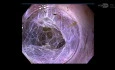
Do not remove the delivery system and wire immediately. Trick: Pass the endoscope through the stent to confirm: Patency: The lumen is open. Position: The stent adequately covers the stricture and any fistula. Wall Apposition: The stent is fully expanded and opposed to the esophageal wall. Check for Bleeding or Perforation.
This user also sharing

The Nightmare of Every GI Endoscopist
boudabbous sami
views: 3596
ERCP Gastroscope
boudabbous sami
views: 784
Recommended
Gastrointestinal Stomal Tumor
Dedy Chandra
views: 93