Are you Health Professional?
Register now, join the community for free access.
GET ALL THE BENEFITS THAT MEDTUBE PLATFORM OFFERS:
- Unlimited access to the largest e-library of professional videos, images, publications, courses
- Connect with peers 450,000+ Healthcare Professionals from 180 countries
- Upload and share your own cases, ask questions and discuss
- Create your professional profile and build personal recognition worldwide
- Stay up-to-date with innovative techniques, treatments, guidelines, discoveries in your fields of interest; be notified
- You are informed about innovative treatments, techniques and innovations in medicine

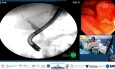
ERCP for Neoplastic Lower CBD Stricture

Case description
Why a lower CBD tumor makes cannulation difficult?
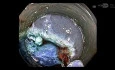
Lower CBD nesoplasic stricture with jaundice, bili more then 500.
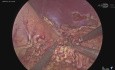
ERCP with brushing & biopsy with biliary plastic stent insertion.
Needle knife has to be considered if you fail accessing the CBD.
A tumor in the lower part of the CBD creates several direct physical obstacles:
Anatomical Distortion: The tumor physically alters the normal anatomy.
Stenosis (Narrowing): The tumor grows inward, narrowing or completely obstructing the lumen (channel) of the bile duct. The guidewire simply hits a wall instead of passing freely.
Altered Axis: The tumor can push, pull, or distort the natural path and angle of the distal CBD and the ampulla. This makes it hard for the endoscopist to find the correct "line" for cannulation.
Inaccessible Ampulla: In some cases, the tumor can grow right down to and involve the ampulla of Vater itself. The papilla (the nipple-like structure housing the ampulla) might look abnormal, swollen, or infiltrated by tumor. The natural opening might be completely obscured or destroyed by the tumor mass, making it impossible to identify or access.
Duodenal Invasion: Advanced tumors can invade through the wall of the bile duct into the duodenum (the first part of the small intestine). This can create a large, friable, and bleeding mass that replaces the normal anatomy of the ampulla.
Impact on Success Rates Standard Biliary Cannulation: In routine ERCPs for conditions like gallstones, success rates for experienced endoscopists are very high, often exceeding 95%. ERCP with a lower CBD tumor: The success rate for standard cannulation drops significantly. It can be very challenging and is often unsuccessful with conventional techniques alone.
Advanced techniques become necessary because standard cannulation is so difficult, endoscopists must frequently employ advanced techniques to achieve access. The choice often depends on the specific anatomy and the reason for the ERCP (e.g., placing a stent for drainage).
Pre-cut Sphincterotomy: This is an advanced technique where a small cut is made above the expected location of the ampulla to expose the bile duct opening. It carries a higher risk of complications, especially pancreatitis and bleeding, but is often necessary.
Transpancreatic Septostomy: A technique where a cut is made through the septum between the bile and pancreatic ducts.
EUS-Guided Biliary Drainage (EUS-BD): If ERCP fails, an interventional endoscopic ultrasound (EUS) procedure can be performed. Under ultrasound guidance, a needle is passed directly from the stomach or duodenum into the blocked bile duct. A stent is then placed to create a new drainage pathway. This is a highly effective salvage technique.
Percutaneous Transhepatic Cholangiography (PTC): This is a radiological approach where a needle is passed through the skin and liver into a bile duct inside the liver. A drain is then passed through the blockage. This is typically a last resort if endoscopic methods fail.
This user also sharing
The Nightmare of Every GI Endoscopist
boudabbous sami
views: 3596
ERCP Gastroscope
boudabbous sami
views: 784
Recommended
Gastrointestinal Stomal Tumor
Dedy Chandra
views: 93