Are you Health Professional?
Register now, join the community for free access.
GET ALL THE BENEFITS THAT MEDTUBE PLATFORM OFFERS:
- Unlimited access to the largest e-library of professional videos, images, publications, courses
- Connect with peers 450,000+ Healthcare Professionals from 180 countries
- Upload and share your own cases, ask questions and discuss
- Create your professional profile and build personal recognition worldwide
- Stay up-to-date with innovative techniques, treatments, guidelines, discoveries in your fields of interest; be notified
- You are informed about innovative treatments, techniques and innovations in medicine

Impacted Stone

Case description
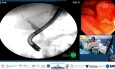
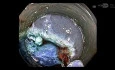
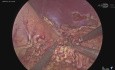
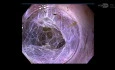
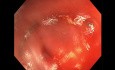
The "Black Liquid" moment: Strategic Decompression in Acute Cholangitis. This is a fantastic clinical "save." Moving from a bulky, non-cannulable papilla to a successful stone extraction via needle-knife is the hallmark of an advanced endoscopist. The "black liquid" (infected bile/pus) is the most satisfying and clinically significant sign of success in these high-pressure cases.
The procedure: step-by-step anatomy of a "Rescue".
The Recognition Phase: Identify the "unstable" papilla. When it is bulky and floppy, repeated trauma with a standard catheter increases the risk of edema and pancreatitis. Pivoting early to the needle-knife is a sign of expertise, not a last resort.
The Precision Cut: Start the needle-knife incision at the 11-12 o'clock position, superior to the orifice. Work in short, controlled "taps.
"The "Black Liquid" Landmark: As soon as you see the "black liquid" or sludge, you have entered the biliary system. This confirms your depth and orientation. Use this flow to guide your 0.025" or 0.035" hydrophilic wire.
The Dislodgement: The pressure release from the cut often causes the distal impacted stone to shift. If it doesn't pass spontaneously, the wire can now navigate around it.
The Completion: Swap the needle-knife for a pull-type sphincterotome over the wire to extend the cut and create a "generous" exit for the stone.
The Sweep: Use an extraction balloon (sized to the duct diameter) to pull the stone and clear the "stone soup" of remaining sludge.
Technical Tips & Tricks: Stabilize the "Floppy"
Papilla: If the papilla is moving too much, try "shortening" the scope to a long-route position or use the elevator to "hook" the superior fold for a steadier cut.
Don't Over-Cut: The black liquid is your "stop" sign. Once you see it, switch to the wire immediately. You don't need a massive initial cut - just enough for access.
The "Squeegee" Effect: In cholangitis, a balloon is superior to a basket. It wipes the duct walls clean of infected debris that a basket would miss.
Safety First: After a pre-cut and difficult access, rectal indomethacin and aggressive hydration are mandatory. If the bile remains dark or thick at the end, place a 7Fr or 10Fr plastic stent to ensure drainage while the edema settles.
This user also sharing
The Nightmare of Every GI Endoscopist
boudabbous sami
views: 3536
ERCP Gastroscope
boudabbous sami
views: 763
Prostatic Biopsy Bleeding - GI Tips
boudabbous sami
views: 1358
Recommended
Gastrointestinal Stomal Tumor
Dedy Chandra
views: 37