Are you Health Professional?
Register now, join the community for free access.
GET ALL THE BENEFITS THAT MEDTUBE PLATFORM OFFERS:
- Unlimited access to the largest e-library of professional videos, images, publications, courses
- Connect with peers 450,000+ Healthcare Professionals from 180 countries
- Upload and share your own cases, ask questions and discuss
- Create your professional profile and build personal recognition worldwide
- Stay up-to-date with innovative techniques, treatments, guidelines, discoveries in your fields of interest; be notified
- You are informed about innovative treatments, techniques and innovations in medicine

Redefining Safety in Laparoscopic Cholecystectomy: Insights into the Madany’s Triangle Technique with a Critical Appraisal


Case description
Abstract
Laparoscopic cholecystectomy (LC) has a persistent risk of bile duct injury (BDI) that stems from the limitations of its anatomical landmarks, such as Calot’s Triangle (CT) and the Critical View of Safety (CVS). That is particularly critical in cases where inflammation, adhesions, or anatomical variations are present. The Madany’s Triangle technique has been introduced as a novel method of dissection to address these challenges. Hence, it enhances intraoperative safety.
This experience-based technical note is derived from the senior author’s extensive practice in hundreds of LC cases, providing a detailed account of the Madany’s Triangle technique, along with expert insights into its advantages and limitations. The observations were recorded during routine surgical practice without formal statistical analysis or comparative studies, and without patient identifiers or additional interventions beyond standard care.
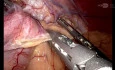
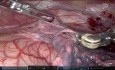
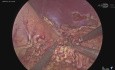
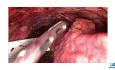
The technique centers on the early scarification of the cystic artery. It creates a dynamic surgical window that enhances the visibility of critical biliary structures, such as the common bile duct. Therefore, it enables dual-angle visualization by applying strategic controlled traction to Hartmann’s pouch, allowing better inspection of the operative field from both right-sided and left-sided views. This deliberate maneuver directly reinforces the Society of American Gastrointestinal and Endoscopic Surgeons (SAGES) strategies for safe laparoscopic cholecystectomy, which emphasize anterior and posterior (dual angle) viewing as a key component of the CVS. In real-life practice, surgeons have reported more explicit anatomical definition and increased confidence during dissection, in addition to fewer intraoperative uncertainties.
The Madany’s Triangle technique represents an innovative advancement in LC by offering a structured, safety-oriented dissection strategy that could improve the surgical outcomes, particularly in complex or high-risk cholecystectomy cases. Future research, including controlled clinical trials, is needed to confirm its efficacy and establish its place alongside or in place of traditional methods such as CVS.