Are you Health Professional?
Register now, join the community for free access.
GET ALL THE BENEFITS THAT MEDTUBE PLATFORM OFFERS:
- Unlimited access to the largest e-library of professional videos, images, publications, courses
- Connect with peers 450,000+ Healthcare Professionals from 180 countries
- Upload and share your own cases, ask questions and discuss
- Create your professional profile and build personal recognition worldwide
- Stay up-to-date with innovative techniques, treatments, guidelines, discoveries in your fields of interest; be notified
- You are informed about innovative treatments, techniques and innovations in medicine

Transplanum Approach in Management of Firm Giant Pituitary Adenoma

 GUIVE SHARIFI
Case description
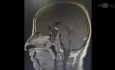
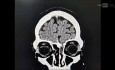
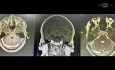
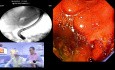
In this video, Dr. Guive Sharifi demonstrates an extended endonasal approach (transplanum approach) to remove a firm pituitary adenoma.The patient is a 34‑year‑old man who developed visual disturbance and signs of hypopituitarism because of a large, fibrous tumor. Large pituitary adenomas often compress the optic nerves; many patients with macroadenomas experience blurred or double vision when the tumor presses on the optic nerves or optic chiasm, leading to loss of peripheral vision. Compression of the normal pituitary tissue can also result in hormonal deficiencies, known as hypopituitarism.This case required a wider approach than the standard trans‑sphenoidal surgery because of the tumor’s firm consistency and suprasellar extension. Fibrous adenomas, which were once thought to be removable only via craniotomy, can now be treated through an expanded endonasal endoscopic approach. During the operation, the upper portion of the sella and the planum sphenoidale are drilled away; removing the planum provides a clear corridor to the tumor. By taking out the tuberculum sellae and the planum sphenoidale, the surgeon gains a direct midline view of the area beneath the optic chiasm, which is crucial when tackling hard, suprasellar tumors. This expanded route allows the tumor to be decompressed and dissected without excessive manipulation of the optic nerves or major arteries. Literature suggests that the purely endoscopic extended transsphenoidal approach is less invasive than craniotomy, offers a wider field of view, and—with multilayer closure—keeps cerebrospinal‑fluid leaks low while often improving visual outcomes.In the video, Dr. Guive Sharifi guides viewers through nasal preparation, bone removal and dural opening, four‑handed tumor dissection, and multi‑layered reconstruction of the skull base. The case illustrates how an expanded endonasal approach can safely remove large, fibrous pituitary adenomas and relieve visual and hormonal symptoms, although long‑term follow‑up is essential to monitor pituitary function.