Are you Health Professional?
Register now, join the community for free access.
GET ALL THE BENEFITS THAT MEDTUBE PLATFORM OFFERS:
- Unlimited access to the largest e-library of professional videos, images, publications, courses
- Connect with peers 450,000+ Healthcare Professionals from 180 countries
- Upload and share your own cases, ask questions and discuss
- Create your professional profile and build personal recognition worldwide
- Stay up-to-date with innovative techniques, treatments, guidelines, discoveries in your fields of interest; be notified
- You are informed about innovative treatments, techniques and innovations in medicine

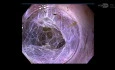
Gastric Varices (21 of 25)
Loading player ... The player requires Flash Player plugin

Case description
To avoid bronco aspiration the patient must be with endotracheal tube. This image as well as the video clips show endotraqueal tube, there are a plenty of fresh blood in the oropharynx, that is the main reason to perform this procedure in the operation room. We can see the endotracheal tube that is placed to prevent aspiration. Every patient who has hematemesis should have an upper endoscopy practiced under general anesthesia, with placement of an endotracheal tube. In this example we can clearly see the amount of blood in the oropharynx. Orotracheal intubation is indicated when there is risk of aspiration because of continuous hematemesis. The main complications associated with gastrointestinal bleeding in patients with hepatic cirrhosis include aspiration, hepatic encephalopathy, and renal failure. All of the complications mentioned cause rapid deterioration of the patient and are an important cause of death. The major risk for aspiration occurs during hematemesis and upper endoscopy, as well as during esophageal tamponade, especially in patients with altered consciousness. Prevention of aspiration is obtained by orotracheal placement in patients with grade III-IV encephalopathy, as well as aspiration of gastric contents before the endoscopic procedure by means of a nasogastric tube.