Are you Health Professional?
Register now, join the community for free access.
GET ALL THE BENEFITS THAT MEDTUBE PLATFORM OFFERS:
- Unlimited access to the largest e-library of professional videos, images, publications, courses
- Connect with peers 450,000+ Healthcare Professionals from 180 countries
- Upload and share your own cases, ask questions and discuss
- Create your professional profile and build personal recognition worldwide
- Stay up-to-date with innovative techniques, treatments, guidelines, discoveries in your fields of interest; be notified
- You are informed about innovative treatments, techniques and innovations in medicine

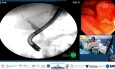
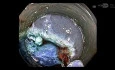
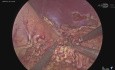
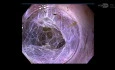
Early Gastric Cancer of the Gastroesophageal Junction - Injection of Solutions to Perform the Mucosectomy
Loading player ... The player requires Flash Player plugin

Case description
Saline dextrosa 50% and adrenalin 1/100.000 was injected into the submucosa. Traditionally, Barrett's esophagus was defined as the presence of columnar mucosa extending >/= 3 cm into the tubular esophagus. This definition has evolved into the presence of any specialized columnar epithelium in the esophagus as it became known that the presence of intestinal metaplasia of any length was associated with an increased risk of esophageal adenocarcinoma. Barrett's esophagus was simply referred to as short-segment (< 3 cm) or long-segment (>/= 3 cm) Even this definition became problematic when it was discovered that as many as 1 in 5 Barrett's esophagus patients have this specific epithelium in the region of an otherwise normal-appearing squamocolumnar junction (ie, intestinal metaplasia of the gastric cardia) While this latter lesion is of little clinical relevance (as neither dysplasia nor cancer occurs to be appreciably increased in that setting), cancer and dysplasia do occur in the more numerous short-segment Barrett's esophagus patients as well as the less commonly encountered long-segment Barrett's patients. While the long-segment patients likely have greater risk for neoplasia compared with the short-segment patients, the risk in short-segment cases is still increased over that of the general population. Whether surveillance exams should be at different intervals for these 2 classifications of Barrett's based on length is controversial, and current guidelines treat them identically.