Are you Health Professional?
Register now, join the community for free access.
GET ALL THE BENEFITS THAT MEDTUBE PLATFORM OFFERS:
- Unlimited access to the largest e-library of professional videos, images, publications, courses
- Connect with peers 450,000+ Healthcare Professionals from 180 countries
- Upload and share your own cases, ask questions and discuss
- Create your professional profile and build personal recognition worldwide
- Stay up-to-date with innovative techniques, treatments, guidelines, discoveries in your fields of interest; be notified
- You are informed about innovative treatments, techniques and innovations in medicine

Navigating the Crater: Strategies for Cannulation and Management of the Intradiverticular Papilla

Case description
Navigating the Crater: Strategies for Cannulation and Management of the Intradiverticular Papilla.
Patient Anatomy
Type III Periampullary Diverticulum
Objective
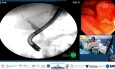
Cannulation and clearance of a 10 mm CBD stone.
1. The Access Phase (Cannulation)
The Problem
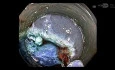
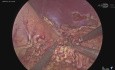
Distorted anatomy and "hooding" of the papilla by redundant diverticular folds.The Maneuver: Likely required "pulling" the papilla into view using the sphincterotome or a cap to flatten the diverticular crater.
Axis Adjustment
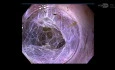
Cannulation usually requires a clockwise rotation (aiming toward 1 o’clock) rather than the standard 11 o’clock.2. The Therapeutic Phase (Stone Extraction)Sphincterotomy: Performed cautiously due to the thinness of the diverticular wall (lacks muscularis).Balloon Choice: A 9-12 mm extraction balloon was selected to match the 10 mm stone.The Result: Smooth extraction of the stone despite the "sump" or "pocket" effect of the diverticulum.3. The Quality Check (Final Sweep)Occlusion Cholangiogram: Performed with an inflated balloon to "seal" the distal duct.Confirmation: Contrast injection confirmed a stone-free duct, no extravasation (leak), and prompt drainage into the duodenum. Tips & Tricks "Cheat Sheet" For Finding the PapillaThe "Cap" trick: If you can't find the orifice, use a transparent cap. It’s a "game changer" for Type I and III cases—it props the cave open so you can see.Submucosal Injection: If the papilla is hidden behind a fold, a small injection of saline at the diverticular rim can "lift" the papilla out into the lumen.Gravity Shift: Turn the patient more toward the prone or even supine position if they are stable; sometimes the diverticulum "unrolls" with a change in posture. For Cannulation & SafetyThe "Two-Wire"
Technique
If you keep hitting the Pancreatic Duct, leave a wire there. It "tents" the bile duct orifice open and acts as a stabilizer.
Small Cuts only
In a diverticulum, the distance between "therapeutic cut" and "perforation" is tiny. Use Short-Pulse (Endocut) mode and cut in 2-3 mm increments.
Wire-Guided only
Never "blindly" push a catheter into a diverticular papilla. The wall is paper-thin; let a floppy-tip ($0.025$ inch) guidewire find the way.
For Post-Procedure CareClip the Rim
If the sphincterotomy reaches the very edge of the diverticular rim, consider placing 1-2 hemoclips to "pinch" the tissue and prevent delayed perforation.
Rectal Indomethacin
Given the extra manipulation often needed for these cases, 100 mg of rectal Indomethacin is standard to prevent post-ERCP pancreatitis.
This user also sharing
The Nightmare of Every GI Endoscopist
boudabbous sami
views: 3535
ERCP Gastroscope
boudabbous sami
views: 763
Prostatic Biopsy Bleeding - GI Tips
boudabbous sami
views: 1358
Recommended
Gastrointestinal Stomal Tumor
Dedy Chandra
views: 37