Are you Health Professional?
Register now, join the community for free access.
GET ALL THE BENEFITS THAT MEDTUBE PLATFORM OFFERS:
- Unlimited access to the largest e-library of professional videos, images, publications, courses
- Connect with peers 450,000+ Healthcare Professionals from 180 countries
- Upload and share your own cases, ask questions and discuss
- Create your professional profile and build personal recognition worldwide
- Stay up-to-date with innovative techniques, treatments, guidelines, discoveries in your fields of interest; be notified
- You are informed about innovative treatments, techniques and innovations in medicine

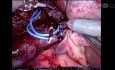
Transvesical Simple Prostatectomy and Diverticulectomy with Single-Port Robot

Case description
Robot assisted simple prostatectomy with the transvesical approach is a surgical procedure primarily used to treat benign prostatic hyperplasia (BPH) and bladder diverticula excision, which claims a minimally invasive approach. Robotic single port system allows surgeons to perform surgical procedures through a single, small incision. The aim of our study was to test the ease and minimally invasiveness of SP.
Matherial and methods
We present our case series of patients who underwent RASP using SP robot from October 2024 to April 2025. The procedure consisted of three main steps through a single 4-cm suprapubic incision: first, excision of the diverticulum or diverticula, then enucleation of the adenoma, and third the reconstruction of the prostate capsule and the bladder neck. After the SP de-docking, the bladder is sutured. No drains or continuous bladder irrigation was used routinely.
Results
Three patients underwent RASP. All procedures were carried out successfully without the need for extra ports or conversions. The median time in the console and the estimated blood loss were 107 minutes and 100 milliliters, respectively. No transfusion occured. There were no significant intraoperative complications.
Overall, 100% of patients were discharged within the first 5 days, with a mean hospital stay and pain score of 3.6 days. The pre-operative median International Prostate Symptom Score was 25.
Conclusions
Single-port transvesical adenomectomy appears to be a promising minimally invasive technique for the surgical treatment of large BPH, offering potential benefits such as reduced scarring, less pain, faster recovery, direct surgical access, and the possibility of addressing concomitant bladder issues.
This user also sharing

Prostatectomy For Prostate Cancer
Vattikuti Foundation
views: 10417