Are you Health Professional?
Register now, join the community for free access.
GET ALL THE BENEFITS THAT MEDTUBE PLATFORM OFFERS:
- Unlimited access to the largest e-library of professional videos, images, publications, courses
- Connect with peers 450,000+ Healthcare Professionals from 180 countries
- Upload and share your own cases, ask questions and discuss
- Create your professional profile and build personal recognition worldwide
- Stay up-to-date with innovative techniques, treatments, guidelines, discoveries in your fields of interest; be notified
- You are informed about innovative treatments, techniques and innovations in medicine

Robotic Assisted Left Renal Veintransposition in Nutcracker Syndrome

Case description
Abstract
Introduction: Nutcracker syndrome, caused by compression of the left renal vein (LRV) between the aorta and superior mesenteric artery, leads to hematuria, flank pain, and impaired venous return. While open LRV transposition is effective, it carries higher morbidity and longer recovery. Endovascular stenting, though minimally invasive, has limitations including stent migration, thrombosis, and long- term anticoagulation, particularly in younger patients.
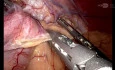
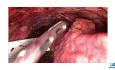
Methods: We present a case of robotic-assisted LRV transposition in a young patient with symptomatic Nutcracker syndrome. The robotic system provided three- dimensional vision and enhanced dexterity, facilitating safe dissection of the LRV, complete mobilization, and tension-free re implantation into the inferior vena cava. Intracorporeal suturing allowed precise vascular anastomosis and secure hemostasis. Results: The procedure was completed without complications. Estimated blood loss was minimal and recovery was rapid, with early return to activity. Postoperative imaging confirmed improved venous outflow and the patient reported complete resolution of symptoms at follow-up.
Conclusion: Robotic-assisted LRV transposition combines the durability of open surgery with the minimally invasive advantages of robotics. This innovative approach demonstrates safety, efficacy, and excellent postoperative outcomes, establishing it as a valuable alternative in selected patients with Nutcracker syndrome.
This user also sharing
Prostatectomy For Prostate Cancer
Vattikuti Foundation
views: 10355