Are you Health Professional?
Register now, join the community for free access.
GET ALL THE BENEFITS THAT MEDTUBE PLATFORM OFFERS:
- Unlimited access to the largest e-library of professional videos, images, publications, courses
- Connect with peers 450,000+ Healthcare Professionals from 180 countries
- Upload and share your own cases, ask questions and discuss
- Create your professional profile and build personal recognition worldwide
- Stay up-to-date with innovative techniques, treatments, guidelines, discoveries in your fields of interest; be notified
- You are informed about innovative treatments, techniques and innovations in medicine

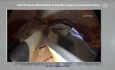
Uterine Fundectomy

Case description
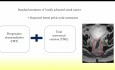
Uterine preservation is particularly critical in developing new surgical approaches that can lead to a positive impact on patient satisfaction. This protocol outlines the first attempt to prospectively test surgical fundectomy in candidates for hysterectomy for benign indications.
Some benign uterine etiologies like uterine fibroids, adenomyosis, endometrial hyperplasia, abnormal or dysfunctional uterine bleeding are leading to hysterectomy. The hysterectomy as a radical surgery that resect a main internal sexual organ is not acceptable for many women even if they are not deciding for child bearing, because of their body images and their belief about sexuality and effects on quality of life. So, the alternative surgical techniques that can improve the satisfaction of the patients are important and must be developed for the purpose of harm reduction in the therapeutic options.
In this paper we present a novel surgical technique entitled “Uterine Fundectomy” that can minimize the harm of the hysterectomy and preserve a part of the uterine that can keep the sexual satisfaction, body images and menstruation periods for patients. In this study we describe the details of surgical technique and present the outcomes and satisfaction of the 50 candidate volunteer patients. Based on our experience in this study, uterine Fundectomy technique has a good outcomes and high satisfaction in patients and is more acceptable for the patients with benign pathologies compare with hysterectomy.
Surgical Procedure
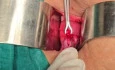
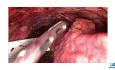
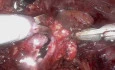
In uterine fundectomy, to prevent intra-operative bleeding, a tourniquet is placed on the lower segment of the uterus below the ovaries. Thus, uterine and ovarian arteries are temporarily closed. Then, the uterine body is cut as a reverse trapezoid by monopolar cautery. The upper side of the trapezoid, which includes the whole uterine fundus, is removed, but the fallopian tubes and cornual segment are preserved. The lower and smaller border of the trapezoid is 1 cm above the internal os of the uterus. Thus, a small uterine cavity remains, as well as the endometrial tissue lining it. The roof of the new uterine cavity, is closed separately by a 2-0 vicryl suture. The lateral uterine segments are sutured to the upper surface and closure is performed. Dead space closure is performed with 0 vicryl suture. After ensuring complete restoration, the tourniquet is opened and complete homeostasis established.
JMIR Res Protoc 2017;6(10):e150doi: 10.2196/resprot.7536PMID: 29017989PMCID: 5654736
This user also sharing

Abdominal Cerclage
AboTaleb Saremi
views: 1346

Adenomyomectomy
AboTaleb Saremi
views: 2016