Are you Health Professional?
Register now, join the community for free access.
GET ALL THE BENEFITS THAT MEDTUBE PLATFORM OFFERS:
- Unlimited access to the largest e-library of professional videos, images, publications, courses
- Connect with peers 450,000+ Healthcare Professionals from 180 countries
- Upload and share your own cases, ask questions and discuss
- Create your professional profile and build personal recognition worldwide
- Stay up-to-date with innovative techniques, treatments, guidelines, discoveries in your fields of interest; be notified
- You are informed about innovative treatments, techniques and innovations in medicine

Standardized Robotic Lateral Pelvic Lymph Node Dissection for Advanced Rectal Cancer

Case description
Standardized robotic lateral pelvic lymph node dissection for advanced rectal cancer: a 3- zone, 2-space anatomical approach.
Introduction and objectives
Lateral pelvic lymph node dissection (LPLND) is essential in managing locally advanced rectal cancer with persistent lateral nodes after neoadjuvant chemoradiation. The procedure’s complexity arises from anatomical constraints and the need for nerve preservation. We aimed to describe a standardized robotic technique to improve safety, reproducibility, and oncological outcomes.
Methods
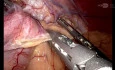
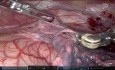
A 3-zone, 2-space approach was developed, focusing on anatomical dissection along fascial planes. Key anatomical boundaries included: cranial (1 cm proximal to the common iliac artery), posterior (presacral fascia), medial (internal iliac artery), lateral (iliopsoas and obturator internus muscles), and distal (Alcock’s canal). Zone 1 extended from ureter to obliterated umbilical artery; Zone 2 from obliterated umbilical artery to external iliac vessels; Zone 3 from external iliac vessels to genitofemoral nerve. A 56-year-old male with ycT3N2M0 rectal adenocarcinoma and a 9 mm persistent left lateral pelvic node underwent robotic abdominoperineal resection with LPLND.
Results
The robotic approach enabled safe identification and preservation of vital structures. Complete clearance of fibrofatty and lymphatic tissue in all three zones was achieved without intraoperative complications. Histopathology confirmed 10 of 18 lymph nodes positive with tumor regression grade 2 and clear resection margins. The patient recovered uneventfully.
Conclusions
This standardized robotic LPLND provides a reproducible method ensuring optimal anatomical dissection and adequate oncological clearance in advanced rectal cancer, supporting improved surgical safety and outcomes.
This user also sharing

Prostatectomy For Prostate Cancer
Vattikuti Foundation
views: 10414