Are you Health Professional?
Register now, join the community for free access.
GET ALL THE BENEFITS THAT MEDTUBE PLATFORM OFFERS:
- Unlimited access to the largest e-library of professional videos, images, publications, courses
- Connect with peers 450,000+ Healthcare Professionals from 180 countries
- Upload and share your own cases, ask questions and discuss
- Create your professional profile and build personal recognition worldwide
- Stay up-to-date with innovative techniques, treatments, guidelines, discoveries in your fields of interest; be notified
- You are informed about innovative treatments, techniques and innovations in medicine

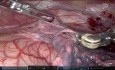
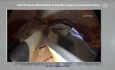
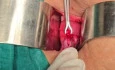
Total Robotic Utero-Sigmoid-Coloneo-Vaginoplasty Restoring Sexual and Fertility Function

Case description
This video was entered by Dr. Elroy Saldanha in the 2022 KS International Robotic Surgery Innovation Awards, sponsored by the Vattikuti Foundation. It was featured in the Vattikuti Symposium 'Humans at the Cutting Edge of Robotic Surgery,' held in Miami, Florida November 19, 2022.
Here is the Abstract: Total Robotic Utero-Sigmoid-Coloneo-Vaginoplasty: Restoring Sexual And Fertility Function.
Presenter: Dr. Elroy Saldanha (Robotic Fellow).
Team and Institution: Dr. Manjiri Somashekhar, Dr. Somashekhar SP. Manipal Hospitals, Bangalore.
Abstract: Vaginal agenesis is a congenital disorder, seen in cases of Mayer–Rokitansky–Kuster– Hauser (MRKH) syndrome, cloaca and intersex disorders, and pelvic exenteration cases for gynecologic cancer. Many operative and nonoperative methods of vaginal reconstruction have been described. A non-operative method (Frank-technique) of serial dilatation is used for a rudimentary vagina. Skin grafts, peritoneum, bladder mucosa, and synthetic material have been used to construct neovagina. These modalities require long-term dilatation and stenting to prevent canal closure. Use of isolated bowel segments has been shown to provide excellent results, circumventing the need for regular dilatation and providing natural lubrication. We present utero-sigmoid-colo-neo-vaginoplasty performed in our patient. 11 year old girl presented in the emergency department with hemoperitoneum, MRI and CECT abdomen showed hematometra with bilateral hematosalphinx, hemorrhagic ovaries with normal diagnostic laparoscopy findings but absence of vagina on examination. Patient was subsequent planned for utero-sigmoid-coloneo-vaginoplasty on a second setting. In this video, we describe total robotic utero-sigmoid-coloneo-vaginoplasty technique, probably the first documented robotic video with intact uterus being anastomosed with the neo-vaginoplasty conduit. Other features of this case are medial to lateral dissection, intra- corporeal anastomosis with sureform stapler, use of ICG for the viability of the conduit, restoration of sexual and fertility function with no future requirements of serial dilatation, following ERAS protocol with feeding of clear fluids on the same evening, no stoma and discharged on post-operative day 5. Total robotic utero-sigmoid-coloneo-vaginoplasty is a boon, as it simplified the post-operative outcomes of a major surgery in a 11 year old.
This user also sharing

Prostatectomy For Prostate Cancer
Vattikuti Foundation
views: 10340