Are you Health Professional?
Register now, join the community for free access.
GET ALL THE BENEFITS THAT MEDTUBE PLATFORM OFFERS:
- Unlimited access to the largest e-library of professional videos, images, publications, courses
- Connect with peers 450,000+ Healthcare Professionals from 180 countries
- Upload and share your own cases, ask questions and discuss
- Create your professional profile and build personal recognition worldwide
- Stay up-to-date with innovative techniques, treatments, guidelines, discoveries in your fields of interest; be notified
- You are informed about innovative treatments, techniques and innovations in medicine

Laparoscopic Management of Isthmocele
Loading player ... The player requires Flash Player plugin

Case description
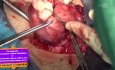
This video shows the laparoscopic treatment of an isthmocele.
The presence of a uterine dehiscence or isthmocele could explain certain gynecological symptoms. The presence of an isthmocele or diverticulum at the level of the uterine scar could lead to retention of menstrual blood by two mechanisms
The first by the existence of this pocket
The second by a valve effect caused by the lower edge of this diverticulum which would hinder the spontaneous evacuation of the periods.
At the level of this diverticulum, there are several phenomena secondary to the accumulation of blood;
congestive endometrium,
polyps,
lymphocytic infiltration,
reactions to suture material,
atypical vascularization
This accumulation of blood would be responsible for persistent bleeding occurring after periods, menorrhagia, chronic pelvic inflammatory conditions, and secondary infertility.
Its incidence is unknown since this entity is still debated
Risk factors
Hysterotomy level. Carrying out a hysterotomy that is too low or too high would be responsible for poor healing quality.
Performing a cesarean section outside of work,
The infection,
The quality of the suture.
Diagnostic
It can be ultrasound but most often the diagnosis is made using hysteroscopy,
Evidence, beyond the cervix, of an anterior uterine defect more or less filled with necrotic or fibrinous tissue attesting to the accumulation of blood. Access to this defect is often hampered by the lower edge of the isthmocele.
MRI is especially useful for assessing the thickness of the remaining myometrium next to the isthmocele.
Treatment
Several treatments have been proposed.Laparoscopic or vaginal treatment is possible,
It requires wide excision and reconstruction.
This technique should be favored for isthmoceles responsible for obstetric accidents.
Hysteroscopic treatments.
When it is not necessary to strengthen the scar, it seems more logical to propose this approach. The aim of this technique is to evacuate the contents of the diverticulum, remove possible foreign bodies, coagulate its surface to treat
abnormalities of the endometrium and abnormal vascularization, and above all resect the banks in order to obtain a gentler slope between the bottom of the diverticulum and the rest of the wall. The results reported by different teams are very interesting regarding the treatment of postmenstrual bleeding or menorrhagia.
The presence of a uterine dehiscence or isthmocele could explain certain gynecological symptoms. The presence of an isthmocele or diverticulum at the level of the uterine scar could lead to retention of menstrual blood by two mechanisms
The first by the existence of this pocket
The second by a valve effect caused by the lower edge of this diverticulum which would hinder the spontaneous evacuation of the periods.
At the level of this diverticulum, there are several phenomena secondary to the accumulation of blood;
congestive endometrium,
polyps,
lymphocytic infiltration,
reactions to suture material,
atypical vascularization
This accumulation of blood would be responsible for persistent bleeding occurring after periods, menorrhagia, chronic pelvic inflammatory conditions, and secondary infertility.
Its incidence is unknown since this entity is still debated
Risk factors
Hysterotomy level. Carrying out a hysterotomy that is too low or too high would be responsible for poor healing quality.
Performing a cesarean section outside of work,
The infection,
The quality of the suture.
Diagnostic
It can be ultrasound but most often the diagnosis is made using hysteroscopy,
Evidence, beyond the cervix, of an anterior uterine defect more or less filled with necrotic or fibrinous tissue attesting to the accumulation of blood. Access to this defect is often hampered by the lower edge of the isthmocele.
MRI is especially useful for assessing the thickness of the remaining myometrium next to the isthmocele.
Treatment
Several treatments have been proposed.Laparoscopic or vaginal treatment is possible,
It requires wide excision and reconstruction.
This technique should be favored for isthmoceles responsible for obstetric accidents.
Hysteroscopic treatments.
When it is not necessary to strengthen the scar, it seems more logical to propose this approach. The aim of this technique is to evacuate the contents of the diverticulum, remove possible foreign bodies, coagulate its surface to treat
abnormalities of the endometrium and abnormal vascularization, and above all resect the banks in order to obtain a gentler slope between the bottom of the diverticulum and the rest of the wall. The results reported by different teams are very interesting regarding the treatment of postmenstrual bleeding or menorrhagia.
This user also sharing
Sterilisation Tubaire Coelioscopique
Nabil Moulay
views: 9164

Hémoretropéritoine
Nabil Moulay
views: 10553
Recommended
Cornoplasty
AboTaleb Saremi
views: 80