Are you Health Professional?
Register now, join the community for free access.
GET ALL THE BENEFITS THAT MEDTUBE PLATFORM OFFERS:
- Unlimited access to the largest e-library of professional videos, images, publications, courses
- Connect with peers 450,000+ Healthcare Professionals from 180 countries
- Upload and share your own cases, ask questions and discuss
- Create your professional profile and build personal recognition worldwide
- Stay up-to-date with innovative techniques, treatments, guidelines, discoveries in your fields of interest; be notified
- You are informed about innovative treatments, techniques and innovations in medicine

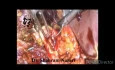
Laparoscopic Cholecystectomy in Impacted Infundibular / Cystic Duct Stone

Case description
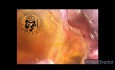
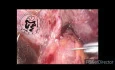
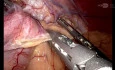
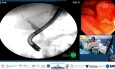
During laparoscopic cholecystectomy, impacted stones in the infundibulum or cystic duct neck can significantly increase intraoperative difficulty by distorting normal anatomy, causing grafting of adhesions, and obscuring the critical landmarks needed for Critical View of Safety (CVS). Impacted stones are frequently associated with inflammation, edema, and fibrosis, and in some cases may lead to hydrops of gallbladder with white bile due to prolonged cystic duct obstruction. Gallbladder hydrops further distends and thins the wall, increases intraluminal tension, and makes grasping and traction more challenging during dissection. Especially in acute or chronic cholecystitis, making safe dissection of the hepatocystic triangle more challenging and increasing the risk of misidentification of biliary structures. Inflammatory changes can hide or efface the cystic duct, potentially producing a “false infundibulum” that may mislead surgeons and predispose to bile duct injury if Calot’s triangle is not fully dissected. Additionally, a large impacted stone often necessitates alternative strategies such as infundibular incision for stone extraction, fundus-first dissection, or subtotal cholecystectomy as bailout techniques to avoid excessive traction on the common bile duct or vascular structures. The surgeon must recognize the “red flag” of an impacted stone early and decide on safe operative tactics, including delaying deep dissection until inflammatory planes are defined, or employing intraoperative cholangiography / ICG to clarify anatomy. Failure to adapt technique in these cases has been linked to higher rates of bile duct and vascular injury compared with straightforward cholecystectomies of normal anatomy.
This user also sharing
Hourglass Gallbladder
Shahram Nazari
views: 17926

Phrygian Cap Gallbladders
Shahram Nazari
views: 25657