Are you Health Professional?
Register now, join the community for free access.
GET ALL THE BENEFITS THAT MEDTUBE PLATFORM OFFERS:
- Unlimited access to the largest e-library of professional videos, images, publications, courses
- Connect with peers 450,000+ Healthcare Professionals from 180 countries
- Upload and share your own cases, ask questions and discuss
- Create your professional profile and build personal recognition worldwide
- Stay up-to-date with innovative techniques, treatments, guidelines, discoveries in your fields of interest; be notified
- You are informed about innovative treatments, techniques and innovations in medicine

Cystic Duct Draining Into the Right Hepatic Duct

Case description
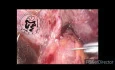
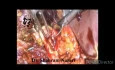
Cystic duct draining into the right hepatic duct is a very important anatomical variation to understand, especially for safe laparoscopic cholecystectomy. Normally, the cystic duct joins the common hepatic duct (CHD) at its lateral aspect to form the common bile duct (CBD).This union usually occurs in the middle third of the extrahepatic biliary tree. The cystic duct is typically 2–4 cm long, and the junction is below the confluence of the right and left hepatic ducts. In this variation, the cystic duct does not join the common hepatic duct at the usual site. Instead, it ascends high and enters directly into the right hepatic duct (RHD). Incidence reported in 0.3–0.8% of individuals.
This variation poses significant surgical risks because it alters the usual landmarks.
1 - Risk of Mistaking the Right Hepatic Duct for the Cystic Duct. The right hepatic duct may be mistaken for the cystic duct if the anatomy is not clearly identified. If the surgeon clips and divides this duct, it causes transection of the right hepatic duct, leading to bile leakage, segmental cholestasis, or major biliary injury.
2 - High Insertion PointThe cystic duct ascends high, close to the porta hepatis.Dissection too close to the liver hilum increases the risk of injury to the right hepatic duct or right posterior sectoral duct.
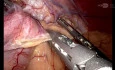
3 - Misidentification during Calot’s Triangle DissectionThe Calot’s triangle becomes distorted or shifted superiorly. Standard landmarks (cystic duct, cystic artery, CHD) may appear atypical.
4 - Difficult Clip or Stapler Placement. Because of the high entry and short cystic duct, applying clips or dividing the duct can be technically challenging.
How to Prevent Injury:
1- Critical View of Safety (CVS) — Always identify: Two and only two structures entering the gallbladder (cystic duct and cystic artery).The lower one-third of the gallbladder dissected off the liver bed.
2 - Avoid deep dissection near the hepatic hilum.
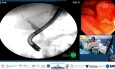
3 - Use intraoperative cholangiography (IOC) or fluorescent cholangiography (ICG) if the anatomy is unclear.
4 - If there’s suspicion of abnormal ductal anatomy — convert to open surgery or seek expert help rather than proceed blindly.
This user also sharing
Hourglass Gallbladder
Shahram Nazari
views: 17935
Phrygian Cap Gallbladders
Shahram Nazari
views: 25667