Are you Health Professional?
Register now, join the community for free access.
GET ALL THE BENEFITS THAT MEDTUBE PLATFORM OFFERS:
- Unlimited access to the largest e-library of professional videos, images, publications, courses
- Connect with peers 450,000+ Healthcare Professionals from 180 countries
- Upload and share your own cases, ask questions and discuss
- Create your professional profile and build personal recognition worldwide
- Stay up-to-date with innovative techniques, treatments, guidelines, discoveries in your fields of interest; be notified
- You are informed about innovative treatments, techniques and innovations in medicine

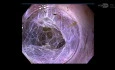
Jejunal Gastrointestinal Stromal tumor (GIST) (5 of 86)
Loading player ... The player requires Flash Player plugin

Case description
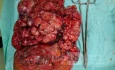
In cases of obscure gastrointestinal bleeding, when a source for blood loss is not apparent from examination of the colon and upper gastrointestinal tract, the small bowel usually becomes the focus of investigation. A tumor with interesting pathologic features was found in a patient who presented with recurrent episodes of massive obscure gastrointestinal hemorrhage, this case highlights the importance of considering small intestinal tumors as the likely cause of obscure gastrointestinal hemorrhage in young patients and how a noninvasive test, eg, abdominal computed tomography scan, might obviate the need for more invasive testing. Gastrointestinal (GI) hemorrhage is considered obscure 1 when conventional investigations (esophagogastroduodenoscopy and colonoscopy) fail to detect bleeding lesions. On average, 27% of patients with obscure GI bleeding have small intestinal lesions. 2. Diagnosing these lesions is frequently difficult because they tend to be inaccessible to routine endoscopy. Small bowel barium studies, radioactive isotope bleeding scans, selective visceral angiography, intraoperative enteroscopy, exploratory laparotomy, and more recently wireless capsule endoscopy all have variable sensitivities and specificities for detecting small intestinal lesions.