Are you Health Professional?
Register now, join the community for free access.
GET ALL THE BENEFITS THAT MEDTUBE PLATFORM OFFERS:
- Unlimited access to the largest e-library of professional videos, images, publications, courses
- Connect with peers 450,000+ Healthcare Professionals from 180 countries
- Upload and share your own cases, ask questions and discuss
- Create your professional profile and build personal recognition worldwide
- Stay up-to-date with innovative techniques, treatments, guidelines, discoveries in your fields of interest; be notified
- You are informed about innovative treatments, techniques and innovations in medicine

No EUS, Portal Hypertension, and an Urgent Gastric Obstruction. No Problem.

Case description
Today’s case was a clinical tightrope. A patient with a known history of portal hypertension presented with severe, intractable abdominal pain and vomiting caused by a massive, 9-month-old pancreatic pseudocyst severely compressing the posterior gastric wall.
The clinical dilemma was intense: The intractable vomiting meant urgent transmural drainage was mandatory to relieve the gastric outlet obstruction.
The portal hypertension meant the vascular stakes were incredibly high - the risk of encountering a gastric varice or hypertensive collateral vessel during a puncture was a major threat.
The catch? No Endoscopic Ultrasound (EUS) was available. When EUS is out of the equation, improvisation is the enemy. Success and patient safety depend entirely on strict adherence to a rigid, multi-modal alternative protocol.
Here is the exact step-by-step technical sequence used to safely bridge the gap:
The Step-by-Step Protocol
Step 1: The Vascular Clearance (Pre-Procedural)
Before the scope ever touched the patient, a dedicated transabdominal ultrasound with Color Doppler was targeted precisely at the contact zone. In a portal hypertension patient, this is non-negotiable to map and rule out ectopic gastric varices or collateral vessels. Vessels cleared. Green light.
Step 2: Solving the Geometry (Scope Selection)
Standard forward-viewing gastroscope: Tip completely unstable against the compressing posterior gastric wall.
Aborted.Colonoscope: Face the same anatomical geometry and torque issues. Aborted.
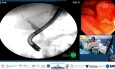
Side-viewing duodenoscope: The oblique optics and the Albarran elevator provided the perfect angle of approach and rigid stability. Locked into position.
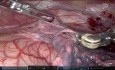
Step 3: Transmural Entry & Tactile Release. A needle-knife was extended to 50% length. Utilizing the (brand hidden), dissection was performed layer-by-layer through the gastric wall until a distinct tactile "give" (loss of resistance) was felt, accompanied by immediate fluid return.
Step 4: The Fluoroscopic "Wire Loop Sign". The guidewire was advanced under exclusive fluoroscopic guidance and looped freely within a well-defined 8 cm cavity. This distinct radiological configuration serves as our "moment of certainty"—the definitive surrogate confirmation of a secure intracystic position, ensuring no false tract was created.
Step 5: Anatomy Confirmation (Pseudocystogram) 10 mL of fluid was aspirated for laboratory analysis, followed by the injection of contrast to obtain a formal pseudocystogram. This confirmed an isolated cavity with zero communication to the main pancreatic duct (Wirsung).
Step 6: Tract Dilation & High-Pressure Egress. The needle-knife was exchanged for a CRE balloon (8–10 mm) and inflated across the tract. Upon deflation, a high-velocity, pressurized rush of cystic fluid surged into the stomach - objectively validating the high intracystic pressure that was driving the patient's severe vomiting and mechanical compression.
Step 7: Definitive Stenting. The drainage sequence was completed by successfully deploying two 10 Fr double-pigtail plastic stents across the newly created cystogastrostomy tract, establishing continuous, secure drainage.
Key Takeaways
For Advanced Endoscopists Doppler is the Substitute: Pre-procedural transabdominal Doppler replaces EUS for essential vascular mapping, which is especially vital in patients with portal hypertension. Embrace the Elevator: When forward-viewing scopes slip or lose leverage against an extrinsic compression, the duodenoscope's elevator changes the vector of force, turning a hostile angle into a stable, perpendicular approach. Trust the Fluoroscopic Sign: The free, large-diameter looping of the guidewire on fluoroscopy provides the ultimate confirmation of intra-cavity placement. Fluid Dynamics Validate Indication: Pressurized fluid arrival upon balloon deflation serves as clinical proof of a highly symptomatic collection requiring urgent decompression. Clinical reasoning, rigid protocols, and mechanical ingenuity can safely bridge the gap when premium technology isn't in the room.
This user also sharing
The Nightmare of Every GI Endoscopist
boudabbous sami
views: 3654
ERCP Gastroscope
boudabbous sami
views: 800
Prostatic Biopsy Bleeding - GI Tips
boudabbous sami
views: 1436
Recommended
Gastrointestinal Stomal Tumor
Dedy Chandra
views: 115