Are you Health Professional?
Register now, join the community for free access.
GET ALL THE BENEFITS THAT MEDTUBE PLATFORM OFFERS:
- Unlimited access to the largest e-library of professional videos, images, publications, courses
- Connect with peers 450,000+ Healthcare Professionals from 180 countries
- Upload and share your own cases, ask questions and discuss
- Create your professional profile and build personal recognition worldwide
- Stay up-to-date with innovative techniques, treatments, guidelines, discoveries in your fields of interest; be notified
- You are informed about innovative treatments, techniques and innovations in medicine

The "Sand" Signal — Adapting Strategy in Real-Time

Case description
The Patient & Presentation:
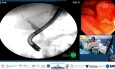
Patient: 90-year-old male.Condition: Acute cholangitis, stabilized with 5 days of antibiotics.Imaging: MRCP suggested a 25 mm "Mega-CBD" with a seemingly single 20 mm stone.
The Procedural Pivot:
Initial Strategy: Primary goal was biliary drainage (bridge stenting) due to the patient's age and recent infection.
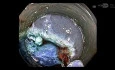
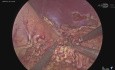
The Access Challenge: The papilla was impacted; standard cannulation with a sphincterotome and guidewire was unsuccessful. The Tactical Shift: A Needle-Knife Infundibulotomy (approx. 1 cm cut) was performed.The "Green Light" Signal: Upon unroofing, biliary sand and small stones migrated out immediately, but no frank pus was observed. This signaled that the infection was controlled and the "20 mm stone" was actually a mobile cluster of smaller debris.
Therapeutic Execution
CBD Access & DilationAfter achieving access with the needle-knife and guidewire, the orifice was enlarged. Given the 25 mm duct and the high stone load, Endoscopic Papillary Large Balloon Dilation (EPLBD) was performed using a 15-18 mm CRE balloon, dilated to 16.5 mm.The "Hydro-Sweep" ClearanceTo ensure a "Mega-CBD" of this size was truly empty, a specialized cleaning technique was used:Mechanical: Extraction balloon sweeps.Hydraulic: Saline was injected below (distal to) the balloon during the sweep. This created a pressure-wash effect that flushed out the "sand" and fragments that imaging had mistaken for a single large mass.Duration: Approximately 35–40 minutes of meticulous cleaning until the occlusion cholangiogram was clear.
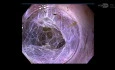
Safety & Drainage: Despite a clean final cholangiogram, an "insurance policy" was placed to prevent recurrent obstruction: Stenting: Two 10 Fr, 10 cm plastic biliary stents were placed.Rationale: The "wick effect" ensures drainage even if residual sand migrates from the upper ducts, and two stents provide better stability in a 25 mm lumen.
Clinical Outcome & Analysis: Immediate Post-Op: No pain, no bleeding, and no signs of perforation.Recovery: Early oral intake (liquids) started the same night; 24-hour hospital observation.Follow-up: MRCP and "second look" ERCP in one month for stent removal and final ductal assessment.
Expert Technical Review: Why this was a success:Adaptability: we didn't stick to the "drainage only" plan when the clinical evidence (mobile sand/no pus) showed that "definitive clearance" was safe and achievable. Ergonomics: Performing a needle-knife and a 40-minute cleaning on a 90-year-old requires extreme stability. Using a "short" scope position and a relaxed, tucked-in arm posture was essential for this level of precision. Risk Mitigation: Avoiding contrast initially and using saline for the final wash minimized intraductal pressure, protecting the patient from post-procedural sepsis.
Key "Tips & Tricks" from this case: The Infundibulotomy Signal: If stones move but pus doesn't flow, you have the "green light" to clear the duct. Saline-Pressure Wash: In a 25 mm duct, the balloon often misses the "corners." Injecting saline below the balloon is the only way to ensure the sand is truly gone. Double-Stenting: In a mega-duct, one stent is a gamble; two stents are a guarantee.
This user also sharing
The Nightmare of Every GI Endoscopist
boudabbous sami
views: 3535
ERCP Gastroscope
boudabbous sami
views: 763
Prostatic Biopsy Bleeding - GI Tips
boudabbous sami
views: 1358
Recommended
Gastrointestinal Stomal Tumor
Dedy Chandra
views: 37