Are you Health Professional?
Register now, join the community for free access.
GET ALL THE BENEFITS THAT MEDTUBE PLATFORM OFFERS:
- Unlimited access to the largest e-library of professional videos, images, publications, courses
- Connect with peers 450,000+ Healthcare Professionals from 180 countries
- Upload and share your own cases, ask questions and discuss
- Create your professional profile and build personal recognition worldwide
- Stay up-to-date with innovative techniques, treatments, guidelines, discoveries in your fields of interest; be notified
- You are informed about innovative treatments, techniques and innovations in medicine

Minimal Frontal Craniectomy and Safe Maximum Surgical Tumor Resection
Loading player ... The player requires Flash Player plugin

Case description
Low-grade astrocytomas are considered low-grade gliomas. Low-grade gliomas are brain tumors that grow slowly and require specialized care. They are a group of tumors that include: fibrillary astrocytoma, protoplasmic astrocytoma and gemistocytic astrocytoma. They differ from their counterpart high-grade astrocytomas, because they have a better prognosis and longer survival, although each of them is a different disease with a different course and prognosis.
As a group, they represent 26.6% of all tumors derived from glial cells in the brain. Separated by age, they represent approximately 15% of intracranial tumors in adults and 25% in children.
The age of presentation of these tumors in adults is around the 4th decade of life. The frontal lobe is the most frequent location, followed by the temporal and parietal lobes.
Currently, technology has increased the safety of surgical procedures, with the arrival of techniques such as neuronavigation, stereotaxy, transoperative brain mapping, transoperative ultrasound or ultrasonic aspirator; all of them in contemporary times must be used with reasoning for the greater benefit of the patient.
We received a patient at our center, 70 years old, male, who was brought to our center for presenting a picture of progressive deterioration of the state of consciousness, with central facial paralysis, mixed aphasia, disorientation and proportional left hemiplegia.
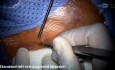
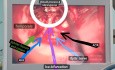
It was decided to perform a minimal frontal craniectomy and safe maximum surgical resection with the patient awake using an pocket neuronavigator, intraoperative ultrasound and endoscopic support.
RESULTS:
- Regression of the state of consciousness 15/15 pints gcs
- Marked improvement of motor defect and facial paralysis
- Verbal and communicative function without alterations
- Regression of subjective symptoms
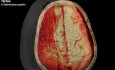
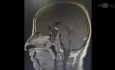
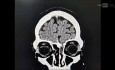
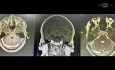
I share with you MRI and intraoperative images as well as images that show the patient's recovery
Thanks to the entire work team of sharab medical center that they made this surgery possible successfully. Our medical director and our cmo. Team of:
Anesthetists
- Carlos Fontes
- Yamundaw Sama
Our scrubs nurses:
- Sulaymam Sima
- Sanna Baldeh
- Abdoulie Ceesay
The patient's personal data, as well as his face, are not shown in the publication to protect his privacy.
This publication is made only for educational and scientific purposes with prior authorization and signature of informed consent by the patient.
As a group, they represent 26.6% of all tumors derived from glial cells in the brain. Separated by age, they represent approximately 15% of intracranial tumors in adults and 25% in children.
The age of presentation of these tumors in adults is around the 4th decade of life. The frontal lobe is the most frequent location, followed by the temporal and parietal lobes.
Currently, technology has increased the safety of surgical procedures, with the arrival of techniques such as neuronavigation, stereotaxy, transoperative brain mapping, transoperative ultrasound or ultrasonic aspirator; all of them in contemporary times must be used with reasoning for the greater benefit of the patient.
We received a patient at our center, 70 years old, male, who was brought to our center for presenting a picture of progressive deterioration of the state of consciousness, with central facial paralysis, mixed aphasia, disorientation and proportional left hemiplegia.
It was decided to perform a minimal frontal craniectomy and safe maximum surgical resection with the patient awake using an pocket neuronavigator, intraoperative ultrasound and endoscopic support.
RESULTS:
- Regression of the state of consciousness 15/15 pints gcs
- Marked improvement of motor defect and facial paralysis
- Verbal and communicative function without alterations
- Regression of subjective symptoms
I share with you MRI and intraoperative images as well as images that show the patient's recovery
Thanks to the entire work team of sharab medical center that they made this surgery possible successfully. Our medical director and our cmo. Team of:
Anesthetists
- Carlos Fontes
- Yamundaw Sama
Our scrubs nurses:
- Sulaymam Sima
- Sanna Baldeh
- Abdoulie Ceesay
The patient's personal data, as well as his face, are not shown in the publication to protect his privacy.
This publication is made only for educational and scientific purposes with prior authorization and signature of informed consent by the patient.