Are you Health Professional?
Register now, join the community for free access.
GET ALL THE BENEFITS THAT MEDTUBE PLATFORM OFFERS:
- Unlimited access to the largest e-library of professional videos, images, publications, courses
- Connect with peers 450,000+ Healthcare Professionals from 180 countries
- Upload and share your own cases, ask questions and discuss
- Create your professional profile and build personal recognition worldwide
- Stay up-to-date with innovative techniques, treatments, guidelines, discoveries in your fields of interest; be notified
- You are informed about innovative treatments, techniques and innovations in medicine

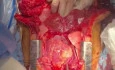
Beating RVOT Reconstruction with Pulmonary Homograft

Case description
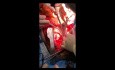
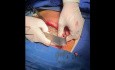
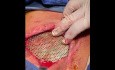
In a patient undergoing a fourth redo sternotomy for Truncus Arteriosus, beating-heart RVOT reconstruction requires meticulous planning and disciplined operative strategy to minimize ischemic time and avoid injury to adherent mediastinal structures. After safely re-entering the chest and dissecting the densely scarred RVOT and pulmonary homograft, cardiopulmonary bypass is established with full-flow support while maintaining the heart beating to reduce myocardial edema and facilitate hemodynamic stability. The calcified and stenotic homograft and surrounding patch material are carefully excised, taking special care to preserve the coronary origins and protect the truncal root. The reconstructed RVOT is then fashioned using a valved conduit or tailored patch-conduit combination, ensuring generous anastomotic geometry to prevent future obstruction. Throughout the procedure, continuous attention is given to avoiding air entrainment, preserving right ventricular function, and maintaining meticulous hemostasis, as bleeding risk is significantly elevated in high-order redo operations. This beating-heart approach offers a safer and more controlled reconstruction in patients with complex redo truncus physiology.