Are you Health Professional?
Register now, join the community for free access.
GET ALL THE BENEFITS THAT MEDTUBE PLATFORM OFFERS:
- Unlimited access to the largest e-library of professional videos, images, publications, courses
- Connect with peers 450,000+ Healthcare Professionals from 180 countries
- Upload and share your own cases, ask questions and discuss
- Create your professional profile and build personal recognition worldwide
- Stay up-to-date with innovative techniques, treatments, guidelines, discoveries in your fields of interest; be notified
- You are informed about innovative treatments, techniques and innovations in medicine

Antireflux Surgery: Intraabdominal Esophageal Length, Hiatal Closure, Cruroplasty

Case description
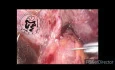
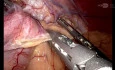
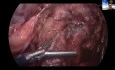
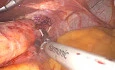
In anti-reflux surgery (such as Nissen, Toupet, Dor), a key principle is that at least 2.5–3 cm of the esophagus should lie intra-abdominally, without tension, after complete mediastinal mobilization of the esophagus. If this length is not achieved by dissection, then an esophageal lengthening procedure (e.g., Collis gastroplasty) may be necessary to avoid wrap failure, recurrence, or dysphagia. After mobilizing the esophagus, the diaphragmatic hiatus should be reduced (closed) in a way that: Restores a “normal” hiatal defect — not too tight, not too loose, Allows the mobilized esophagus to lie without tension and retain the intra-abdominal segment, Uses non-absorbable sutures (typically 2–4) to approximate the crura. A practical target for the hiatal closure is a hiatal opening of roughly ~2 × 2 cm, so that the esophagus can pass freely but without leaving excessive space that might allow herniation or slippage of the fundoplication.
This user also sharing
Hourglass Gallbladder
Shahram Nazari
views: 17934

Phrygian Cap Gallbladders
Shahram Nazari
views: 25661