Are you Health Professional?
Register now, join the community for free access.
GET ALL THE BENEFITS THAT MEDTUBE PLATFORM OFFERS:
- Unlimited access to the largest e-library of professional videos, images, publications, courses
- Connect with peers 450,000+ Healthcare Professionals from 180 countries
- Upload and share your own cases, ask questions and discuss
- Create your professional profile and build personal recognition worldwide
- Stay up-to-date with innovative techniques, treatments, guidelines, discoveries in your fields of interest; be notified
- You are informed about innovative treatments, techniques and innovations in medicine

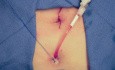
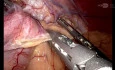
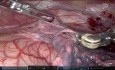
Robotic-Assisted Laparoscopic Ileocystoplasty and Mitrofanoff Appendicovesicostomy

Case description
Introduction and objectives:
Augmentation ileocystoplasty is needed for patients who fail medical management of neurogenic bladders to protect the upper tracts. This procedure helps pediatric patients increase their bladder capacity, decrease voiding pressures, and is often coupled with a catheterizable channel to achieve social continence. We present a step-by-step video of the robotic-assisted laparoscopic ileocystoplasty and Mitrofanoff appendicovesicostomy with modifications.
Methods:
Once the appendix has been identified, a stay suture is placed at the tip of the appendix to assist dissection and manipulation. If the appendix appears short, a broad cecal flap can be created to ensure adequate length and to avoid stomal stenosis. The defect in the cecum should be closed in a single seromuscular layer. Approximately 20cm of ileum is isolated 20cm proximal to the ileocecal junction to be used as the cystoplasty patch. A detrusor tunnel is created and the appendix tip is spatulated. After placing a feeding tube across the anastomosis, the detrusor is reapproximated. The ileal segment is detubularized and sutured to the cystotomy. Two suprapubic catheters provide maximal drainage. A V-shaped skin flap is created and the appendix is brought up to the stoma site.
Results:
In our cohort, 19 patients underwent open ileocystoplasty and 26 patients underwent robotic-assisted laparoscopic ileocystoplasty. Median operative time was longer in the robotic cohort, but other perioperative outcomes were comparable between the two groups. The robotic cohort demonstrated higher rates of upper tract stabilization.
Conclusions:
Robotic-assisted laparoscopic ileocystoplasty is a feasible approach and our modifications have helped make it a viable alternative for open augmentation ileocystoplasty.
This user also sharing

Prostatectomy For Prostate Cancer
Vattikuti Foundation
views: 10387