Are you Health Professional?
Register now, join the community for free access.
GET ALL THE BENEFITS THAT MEDTUBE PLATFORM OFFERS:
- Unlimited access to the largest e-library of professional videos, images, publications, courses
- Connect with peers 450,000+ Healthcare Professionals from 180 countries
- Upload and share your own cases, ask questions and discuss
- Create your professional profile and build personal recognition worldwide
- Stay up-to-date with innovative techniques, treatments, guidelines, discoveries in your fields of interest; be notified
- You are informed about innovative treatments, techniques and innovations in medicine

Laparoscopic Repair of a Left Traumatic Diaphragmatic Rupture (Diaphragmatic Hernia)


Case description
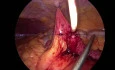
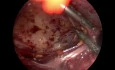
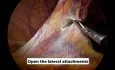
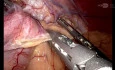
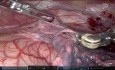
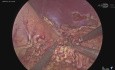
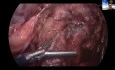
Traumatic diaphragmatic hernia remains an uncommon but serious consequence of blunt thoracoabdominal trauma [1]. Delayed diagnosis may lead to visceral herniation with respiratory or digestive complications [2]. This video presentation aims to describe the technical aspects of laparoscopic repair of a traumatic left diaphragmatic hernia. Methods: We report the case of a 62-year-old male who presented to the emergency department after falling from a height of 7 meters. He was haemodynamically stable. Body scan demonstrated a left diaphragmatic defect with herniation of the left colon, the stomach, and the great omentum into the thoracic cavity. We opted for a laparoscopic approach. The diaphragmatic defect measured 3 centimeters. After reduction of the herniated viscera, the defect was closed using interrupted non-absorbable sutures. No prosthetic material was required. Operative details and key technical steps are illustrated in the accompanying video. Results: Laparoscopic repair was completed successfully without conversion. Operative time was 90 minutes. No intraoperative complications occurred. Postoperative recovery was uneventful, with early resumption of oral intake on postoperative day one. The patient was discharged on postoperative day four. At 6 months follow-up, he remained asymptomatic with no clinical or radiological evidence of recurrence. Conclusion: Laparoscopic repair of traumatic left diaphragmatic hernia is a safe and effective option in selected patients. This minimally invasive approach allows excellent visualization, precise reduction of herniated organs, and secure closure of the diaphragmatic defect, while offering the benefits of reduced postoperative pain and faster recovery. The presented video highlights key technical points that may help standardize this approach in experienced minimally invasive surgery units.