Are you Health Professional?
Register now, join the community for free access.
GET ALL THE BENEFITS THAT MEDTUBE PLATFORM OFFERS:
- Unlimited access to the largest e-library of professional videos, images, publications, courses
- Connect with peers 450,000+ Healthcare Professionals from 180 countries
- Upload and share your own cases, ask questions and discuss
- Create your professional profile and build personal recognition worldwide
- Stay up-to-date with innovative techniques, treatments, guidelines, discoveries in your fields of interest; be notified
- You are informed about innovative treatments, techniques and innovations in medicine

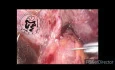
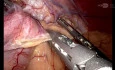
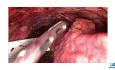
Esophageal Lengthening in Hiatal Hernia Repair – Vagal Nerve Release Technique (Avoiding Collis)

Case description
This video demonstrates a technical nuance during laparoscopic hiatal hernia repair aimed at achieving additional intra-abdominal esophageal length without performing a Collis gastroplasty. In selected patients with a borderline short esophagus, careful mediastinal mobilization combined with posterior vagus nerve release can provide 1–2 cm of additional length while preserving vagal integrity. By releasing posterior vagal adhesions and periesophageal tethering within the mediastinum, the esophagus gains improved mobility and a tension-free position below the diaphragm. This maneuver may reduce the need for formal lengthening procedures and their associated morbidity. Achieving adequate intra-abdominal esophageal length is essential for a durable fundoplication and for minimizing recurrence. The technique is particularly useful in large sliding or paraesophageal hernias where fibrosis and chronic traction contribute to limited mobility.
This video highlights the key anatomical landmarks, dissection planes, and safety considerations to optimize outcomes in advanced hiatal hernia repair.
This user also sharing
Hourglass Gallbladder
Shahram Nazari
views: 17920
Phrygian Cap Gallbladders
Shahram Nazari
views: 25650