Are you Health Professional?
Register now, join the community for free access.
GET ALL THE BENEFITS THAT MEDTUBE PLATFORM OFFERS:
- Unlimited access to the largest e-library of professional videos, images, publications, courses
- Connect with peers 450,000+ Healthcare Professionals from 180 countries
- Upload and share your own cases, ask questions and discuss
- Create your professional profile and build personal recognition worldwide
- Stay up-to-date with innovative techniques, treatments, guidelines, discoveries in your fields of interest; be notified
- You are informed about innovative treatments, techniques and innovations in medicine

Inan Modification TRAPPIST Repair for Bricker Ileal Conduit Urostomy Parastomal Hernia Repair (PSH)

Case description
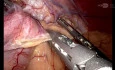
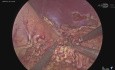
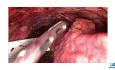
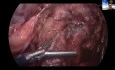
This video presents a robotic transabdominal preperitoneal parastomal hernia repair performed for a Bricker ileal conduit, illustrating a fully preperitoneal prosthetic strategy consistent with the concepts recently formalised in the TRAPPIST repair described by Filip Muysoms and colleagues. The approach avoids retromuscular dissection and transversus abdominis release, offering a less invasive alternative to Pauli-type repairs while ensuring complete separation of the mesh from the intraperitoneal cavity. The video focuses on the technical aspects of wide and controlled preperitoneal dissection, meticulous peritoneal flap creation, and precise handling of the stoma limb. Stoma management includes recalibration of the conduit aperture combined with systematic imbrication of the hernia sac, performed as a single step with the dual objective of restoring an appropriate stomal diameter and reducing dead space in order to minimise postoperative seroma formation. Stoma lateralisation follows a hybrid configuration that combines key principles of the Sugarbaker concept with keyhole-inspired geometry, aiming to optimise bowel routing while limiting mesh–viscera interaction. Reinforcement is achieved using a large 24 × 20 cm auto-adherent polypropylene ProGrip™ mesh, positioned entirely within the preperitoneal plane to provide generous overlap without fixation-related trauma. Robotic assistance is central to this approach, enabling fine dissection around the conduit mesentery and accurate mesh deployment in a technically demanding anatomical environment. This video contributes to the ongoing discussion on preperitoneal strategies for parastomal hernia repair, particularly in the setting of urological stomas, and reflects the current shift toward extraperitoneal, anatomy-preserving solutions in complex abdominal wall surgery.