Are you Health Professional?
Register now, join the community for free access.
GET ALL THE BENEFITS THAT MEDTUBE PLATFORM OFFERS:
- Unlimited access to the largest e-library of professional videos, images, publications, courses
- Connect with peers 450,000+ Healthcare Professionals from 180 countries
- Upload and share your own cases, ask questions and discuss
- Create your professional profile and build personal recognition worldwide
- Stay up-to-date with innovative techniques, treatments, guidelines, discoveries in your fields of interest; be notified
- You are informed about innovative treatments, techniques and innovations in medicine

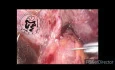
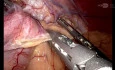
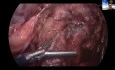
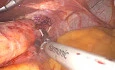
Laparoscopic Ventral Incisional Hernia Repair Using Intraperitoneal Onlay Mesh (IPOM) for Intramural Hernias

Case description
The life-time risk for developing a ventral hernia has been estimated at 5% in the general population. Ventral hernias are either primary, or secondary to abdominal surgery (incisional). The cumulative incidence of incisional hernia may be as high as 28% following open abdominal surgery. Although hernia mesh repair significantly reduces the likelihood of recurrence, there is still a small risk. Factors such as infection, poor healing, or excessive strain on the repair site can contribute to recurrence. Intramural hernia is a cause of recurrent abdominal hernia mesh repair. Since it was introduced by Karl Leblanc in 1993, laparoscopic ventral hernia repair (LVHR) has gained increasing acceptance due to better postoperative outcomes compared to open ventral hernia repair (OVHR), but there is considerable controversy regarding the optimal approach. Two laparoscopic approaches are commonly used in LVHR: simple intraperitoneal onlay mesh (sIPOM); and IPOM with defect closure prior to placement of mesh (IPOM-plus).
This user also sharing
Hourglass Gallbladder
Shahram Nazari
views: 17925

Phrygian Cap Gallbladders
Shahram Nazari
views: 25656