Are you Health Professional?
Register now, join the community for free access.
GET ALL THE BENEFITS THAT MEDTUBE PLATFORM OFFERS:
- Unlimited access to the largest e-library of professional videos, images, publications, courses
- Connect with peers 450,000+ Healthcare Professionals from 180 countries
- Upload and share your own cases, ask questions and discuss
- Create your professional profile and build personal recognition worldwide
- Stay up-to-date with innovative techniques, treatments, guidelines, discoveries in your fields of interest; be notified
- You are informed about innovative treatments, techniques and innovations in medicine

Histopathology of Strobilocercosis


 Mehmet Gül
Case description
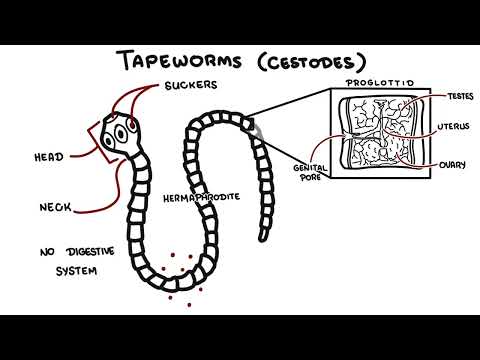
The adult form of Taenia taeniaeformis is found in the intestine of the cat and cheetah. The larva form is called Stro-bilocercus fasciolaris and is found in rodents such as mice and rats. Our objective was to draw attention to that rare zoonosis, since it has already been reported in the literature as strobilocercosis in humans. During an experimental animal study con-ducted at Inonu University, some unexpected cystic formations were found in the livers of nine 6-8-month-old healthy white mice, which affected the conducted study negatively. These cystic formations were examined histopathologically. Prepared sec-tions were stained with haemotoxylin eosin, periodic acid-Schiff and Masson trichrome stains, and examined by light microsco-py. Strobilocercus fasciolaris larvae that curled towards cyst cavity and their hooks were seen. Plasma cells, macrophage, focus of eosinophilic infiltration and fibroblastic connective tissue were simultaneous found. In this paper, histopathological changes in intermediate hosts caused by Strobilocercus fasciolaris and other cestod larvae have been discussed.
Other publications of this user


Necrosis in Echinococcosis
Nasuhi AYDIN
views: 149
Recommended
Necrosis in Echinococcosis
Nasuhi AYDIN
views: 149