Are you Health Professional?
Register now, join the community for free access.
GET ALL THE BENEFITS THAT MEDTUBE PLATFORM OFFERS:
- Unlimited access to the largest e-library of professional videos, images, publications, courses
- Connect with peers 450,000+ Healthcare Professionals from 180 countries
- Upload and share your own cases, ask questions and discuss
- Create your professional profile and build personal recognition worldwide
- Stay up-to-date with innovative techniques, treatments, guidelines, discoveries in your fields of interest; be notified
- You are informed about innovative treatments, techniques and innovations in medicine

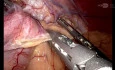
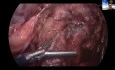
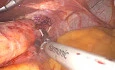
Robot-assisted Minimal Invasive CABG Using Bilateral Thoracic Arteries

Case description
Robot-assisted minimal invasive CABG using bilateral thoracic arteries Algoet Michiel, MD1; Wouter Oosterlinck, MD PhD1 1Department of Cardiovascular sciences, research unit cardiac surgery, KU Leuven, Leuven, Belgium
BACKGROUND
Robotically-assisted minimal invasive direct coronary artery bypass (RA-MIDCAB) is an attractive strategy for coronary revascularization, although bilateral internal thoracic artery (BITA) grafting is complex it allows us for total left sided arterial revascularization.
METHODS
The RA-MIDCAB technique involves robotic internal thoracic artery harvesting followed by a manual anastomosis performed through a mini-thoracotomy. We analyzed all off-pump CABG and RA- MIDCAB coronary surgery using BITA from 01/01/2015 – 31/10/2022, propensity score matching (PSM) was performed. Primary outcomes are major adverse cardiovascular and cerebrovascular events (MACCE) and mortality. Secondary outcomes are surgical parameters a length of hospital stay. We also checked for effects of learning curve.
RESULTS
We included 601 OPCAB and 75 RA-MIDCAB procedures, after PSM this resulted in 2 cohorts of 54 patients. Mortality and MACCE survival analysis showed no significant difference. Surgery time is significant longer in the RA-MIDCAB group, but decreases after 40 cases (p less than 0.01). There is less blood transfusion in RA-MIDCAB (p=0.02), less (p less than 0.01) intensive care unit (ICU) admissions , shorter ICU stay and shorter hospital stay in respectively RA-MIDCAB vs OPCAB. CONCLUSION: This is a first publication of 75 consecutive RA-MIDCAB BITA harvesting for left ventricular wall revascularization. It is a safe technique, the advantages are shorter length of hospital stay, less ICU admissions and less blood transfusion. This technique expands the surgical coronary revascularization group and improves their outcomes.
This user also sharing

Prostatectomy For Prostate Cancer
Vattikuti Foundation
views: 10343