Are you Health Professional?
Register now, join the community for free access.
GET ALL THE BENEFITS THAT MEDTUBE PLATFORM OFFERS:
- Unlimited access to the largest e-library of professional videos, images, publications, courses
- Connect with peers 450,000+ Healthcare Professionals from 180 countries
- Upload and share your own cases, ask questions and discuss
- Create your professional profile and build personal recognition worldwide
- Stay up-to-date with innovative techniques, treatments, guidelines, discoveries in your fields of interest; be notified
- You are informed about innovative treatments, techniques and innovations in medicine

Right RVOT Reconstruction in Very Challenging Operation with Pulmonary Homograf

Case description
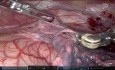
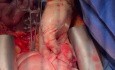
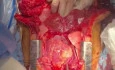
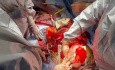
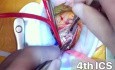
In patients with a history of truncus arteriosus repair who now require redo RVOT reconstruction after degeneration of a pulmonary homograft, a “four-do” operative strategy provides a systematic approach to safe re-entry and effective reconstruction. The procedure begins with redo sternotomy under meticulous dissection to free the heart and great vessels from dense adhesions while protecting the homograft and ascending aorta. After establishing redo cardiopulmonary bypass, usually via aortic and bicaval or femoral cannulation depending on the adhesions, the surgeon performs redo excision of the calcified or stenotic pulmonary homograft, including removal of obstructive patches or conduit remnants while preserving the native branch pulmonary arteries. The operation is completed with redo RVOT reconstruction, typically using a valved conduit or large bioprosthetic pulmonary homograft tailored to the patient’s anatomy, ensuring unobstructed forward flow and a tension-free anastomosis to both the RV outflow and distal PA bifurcation. This standardized “four-do” sequence - redo sternotomy, redo bypass, redo excision, and redo reconstruction - helps optimize safety, maintain right ventricular function, and achieve durable repair in complex reoperative truncus patients.