Are you Health Professional?
Register now, join the community for free access.
GET ALL THE BENEFITS THAT MEDTUBE PLATFORM OFFERS:
- Unlimited access to the largest e-library of professional videos, images, publications, courses
- Connect with peers 450,000+ Healthcare Professionals from 180 countries
- Upload and share your own cases, ask questions and discuss
- Create your professional profile and build personal recognition worldwide
- Stay up-to-date with innovative techniques, treatments, guidelines, discoveries in your fields of interest; be notified
- You are informed about innovative treatments, techniques and innovations in medicine

Laparoscopic Latero-lateral Ureteropyeloplasty
Loading player ... The player requires Flash Player plugin

Case description
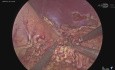
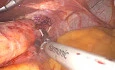
This video presents the laparoscopic side to side ureteropyeloplasty used by the authors’ working group. This approach is described in a stepwise fashion.
Side to side ureteropyeloplasty, also known as a bypass pyeloplasty, is a surgical technique used to repair the ureteropelvic junction obstruction without fully dismembering the UPJ, ideally suited for the high inserting uréter.
In this case, the patient principal symptom is episodic flank and upper abdominal pain. Ultrasound shows significant dilatation of the collecting system in the left kidney and MAG3 scan confirms obstructive pattern.
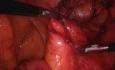
A laparoscopic side-to-side anastomosis is performed between the uréter just distal to the UPJ obstruction and the hydronephrotic renal pelvis, without disturbed or surgically reduced de UPJ.
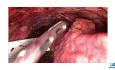
This can be accomplish by the exposure of renal pelvis and proximal uréter, with traction sutures through the abdominal wall. After both incisión of the renal pelvis and the uréter with monopolar electrosurgical energy through a needle, the ureter and renal pelvis are aligned to ensure that the side to side anastomosis can be accomplished without tension.
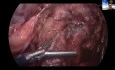
The anastomosis is performed using a 5.0 Vycril running suture, starting for the posterior wall. A double-pigtail ureteral stent is placed before the anterior wall closure is completed.
The double-pigtail ureteral is removed 4-6 weeks after the initial procedure, the patient refers resolution of flank and abdominal pain. A renal ultrasonogram after stent removal shows improvement of the hydronephrosis.
Side to side pyeloplasty provides an easier and more reliable technique for cases of primary pyeloureteral stricture.
Side to side ureteropyeloplasty, also known as a bypass pyeloplasty, is a surgical technique used to repair the ureteropelvic junction obstruction without fully dismembering the UPJ, ideally suited for the high inserting uréter.
In this case, the patient principal symptom is episodic flank and upper abdominal pain. Ultrasound shows significant dilatation of the collecting system in the left kidney and MAG3 scan confirms obstructive pattern.
A laparoscopic side-to-side anastomosis is performed between the uréter just distal to the UPJ obstruction and the hydronephrotic renal pelvis, without disturbed or surgically reduced de UPJ.
This can be accomplish by the exposure of renal pelvis and proximal uréter, with traction sutures through the abdominal wall. After both incisión of the renal pelvis and the uréter with monopolar electrosurgical energy through a needle, the ureter and renal pelvis are aligned to ensure that the side to side anastomosis can be accomplished without tension.
The anastomosis is performed using a 5.0 Vycril running suture, starting for the posterior wall. A double-pigtail ureteral stent is placed before the anterior wall closure is completed.
The double-pigtail ureteral is removed 4-6 weeks after the initial procedure, the patient refers resolution of flank and abdominal pain. A renal ultrasonogram after stent removal shows improvement of the hydronephrosis.
Side to side pyeloplasty provides an easier and more reliable technique for cases of primary pyeloureteral stricture.