Are you Health Professional?
Register now, join the community for free access.
GET ALL THE BENEFITS THAT MEDTUBE PLATFORM OFFERS:
- Unlimited access to the largest e-library of professional videos, images, publications, courses
- Connect with peers 450,000+ Healthcare Professionals from 180 countries
- Upload and share your own cases, ask questions and discuss
- Create your professional profile and build personal recognition worldwide
- Stay up-to-date with innovative techniques, treatments, guidelines, discoveries in your fields of interest; be notified
- You are informed about innovative treatments, techniques and innovations in medicine

Understanding Cracked Tooth Syndrome and the Dental Occlusion Triad

Case description
You're doing a routine exam when you spot it - a stained hairline crack snaking across the marginal ridge of a molar. Your patient hasn't mentioned any symptoms… Yet.
Should you sound the alarm? Monitor and wait? Jump straight to treatment?
Cracked teeth are one of dentistry's most misunderstood diagnoses. Colleagues debate whether to crown or monitor. And that crack you're staring at? It could stay dormant for years—or spiral into an extraction by next month.
So what separates the teeth that crack catastrophically from those that quietly hold together?
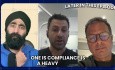
In this episode, I am joined by final-year dental student Emma (https://www.instagram. com/emmalydiahutchison) to crack the code (pun intended) on cracked tooth syndrome.
We break down the easy-to-remember “position, force, time” framework to help you spot risk factors before disaster strikes, and share a real-world case of a 19-year-old bruxist whose molar was saved by smart occlusal thinking.
If you've ever felt uncertain about diagnosing, explaining, or managing cracked teeth, this episode will change how you think about every suspicious line you see.
Key Takeaways:
- Risk factors include large restorations and bruxism.
- Occlusion plays a significant role in tooth health.
- Diet can impact the integrity of teeth.
- Every patient presents unique challenges in treatment.
- Communication about dental issues is key for patient care.
- Certain teeth are more prone to fractures due to their anatomy.
- The weakest link theory explains why some patients experience more dental issues.
- Patient history is crucial in predicting future dental problems.
- The age and dental history of a patient influence treatment decisions.
- Understanding occlusion is essential for diagnosing and treating cracked teeth.
- The location of a tooth affects the force it experiences during chewing.
- Bruxism increases the risk of tooth fractures.
- Tooth contacts and forces play a critical role in diagnosing issues.
- Opposing teeth can provide valuable insights into tooth health.
- Effective communication is essential in managing cracked teeth.
- Stains on teeth can indicate deeper issues with cracks.
- Monitoring and documenting cracks over time is crucial for patient care.
Highlights of this episode:
00:00 Teaser
00:49 Intro03:25 Emma’s Dental School Updates
07:18 What is Cracked Tooth Syndrome (CTS)?
10:02 Crack Progression and Severity
12:45 Risk Factors
14:54 Position–Force–Time Framework
21:53 Which Teeth Fracture Most Often?
25:32 Midroll
28:53 Which Teeth Fracture Most Often?
30:37 The Weakest Link Theory34:05 Diagnostic Tools
37:56 Treatment Planning
39:42 Case Study – High Force Patient
47:27 Communication and Patient Management
51:03 Key Clinician Takeaways
53:03 Conclusion and Next Episode Preview
53:42 Outro
Check out the AAE cracked teeth and root fracture guide (https://www.aae. org/specialty/wp-content/uploads/sites/2/2022/12/ecfe-2022-edition-FINAL.pdf) for excellent visuals and classification details.
Literature review on cracked teeth (https://pubmed. ncbi.nlm.nih.gov/20590967/) – examines evidence around risk factors, prevention, diagnosis, and treatment of cracked teeth.
This episode is eligible for 0.75 CE credits via the quiz on Protrusive Guidance. (https://protrusive. co.uk/ultimate)
This episode contributes to the following GDC development outcomes:Outcome C AGD Subject Code: 250 - Operative (Restorative) Dentistry

This user also sharing

Basics Of Occlusion
Jaz Gulati
views: 3876
Wisdom Teeth Surgical Extraction Top Tips
Jaz Gulati
views: 3545
Recommended

Orthodontics
MKA e-class
views: 86