colonoscopy
Colonoscopy is an endoscopic procedure involving the systematic examination of the entire large intestine (colon) and rectum using a flexible fiberoptic instrument called a colonoscope. It serves as the gold standard for colorectal cancer screening, diagnosis, and therapeutic intervention.
Indications:
- Colorectal Cancer Screening: Primary screening for asymptomatic individuals at average risk, typically commencing at age 45-50, or earlier for those with increased risk factors (e.g., family history of colorectal cancer or polyps).
- Diagnostic Evaluation: Investigation of intestinal symptoms such as unexplained rectal bleeding, chronic changes in bowel habits, abdominal pain, iron deficiency anemia, or to evaluate inflammatory bowel disease (IBD).
- Surveillance: Follow-up for individuals with a history of polyps, colorectal cancer, or certain genetic syndromes.
- Therapeutic Interventions: Management of identified pathologies.
Procedure:
- Bowel Preparation: Rigorous bowel preparation is paramount for optimal visualization. This typically involves dietary restrictions (clear liquid diet) and the administration of large-volume cathartic solutions to thoroughly cleanse the colon of fecal matter. Inadequate preparation significantly compromises the diagnostic yield.
- Sedation/Anesthesia: The procedure is generally performed under conscious sedation (e.g., benzodiazepines and opioids) or, less commonly, deep sedation or general anesthesia, depending on patient preference, comorbidities, and institutional protocols.
- Colonoscope Insertion: The patient is positioned in the left lateral decubitus position. Following a digital rectal examination, the lubricated colonoscope is gently inserted through the anus and advanced proximally through the rectum, sigmoid colon, descending colon, transverse colon, ascending colon, and into the cecum, ideally reaching the terminal ileum for a complete examination.
- Visualization and Insufflation: Air or carbon dioxide is insufflated to distend the colonic lumen, facilitating a comprehensive view of the mucosal lining. The high-resolution camera at the scope's tip transmits real-time images to a monitor, allowing for meticulous inspection of the bowel wall.
- Diagnostic and Therapeutic Maneuvers: As the colonoscope is advanced and subsequently withdrawn, the entire mucosal surface is systematically scrutinized for abnormalities such as polyps, inflammation, ulcers, strictures, or diverticula. Specialized instruments can be passed through the scope's working channel to perform:
- Biopsy: Acquisition of tissue samples for histopathological analysis.
- Polypectomy: Endoscopic removal of polyps, which are precursors to colorectal cancer, using snares and electrosurgical cautery (e.g., hot snare polypectomy, cold snare polypectomy).
- Hemostasis: Control of active bleeding using injection therapy, thermal coagulation, or mechanical clips.
- Dilation and Stenting: Management of colonic strictures.
- Foreign Body Retrieval: Removal of intraluminal foreign objects.
- Endoscopic Mucosal Resection (EMR) or Endoscopic Submucosal Dissection (ESD): Techniques for en bloc resection of larger or more complex superficial lesions.
Post-Procedure Care: Patients are monitored in a recovery area until the effects of sedation dissipate. Common transient symptoms include abdominal cramping and flatulence due to residual gas. Specific instructions regarding diet, activity, and medication resumption are provided.
Advantages:
- Simultaneous Diagnosis and Treatment: Unlike other screening modalities, colonoscopy allows for immediate removal of precancerous polyps, thereby preventing the progression to malignancy.
- High Diagnostic Accuracy: Direct visualization provides detailed mucosal assessment, and biopsies enable definitive histopathological diagnosis.
- Therapeutic Versatility: Capability to perform various interventions during the same procedure.
Potential Complications: While generally safe, potential complications include:
- Perforation: Traumatic injury to the bowel wall, a rare but serious complication requiring surgical intervention.
- Bleeding: Post-polypectomy bleeding or bleeding from biopsy sites, which can be immediate or delayed.
- Sedation-related Adverse Events: Respiratory depression, allergic reactions, or cardiovascular events.
- Post-Polypectomy Syndrome: Localized abdominal pain and fever, often managed conservatively.
The skilled execution of colonoscopy, coupled with thorough bowel preparation, is fundamental to its effectiveness in colorectal disease management and prevention.


Endoscopic Giant Polyp Polypectomy - Descending...
In this video I am demonstrating an endoscopic polypectomy in a patient with a giant polyp at 35cms from anal verge. I have used clips and hot snare. Final histology showed clear margins, low grade dysplasia...

Endoscopic Giant Polyp Polypectomy - Transverse...
This video demonstrates an endoscopic polypectomy of a giant transverse colon pediculated polyp. I used hot snare and regular hemoclips to close the resulting defect. Histology came back as tubulo-villous...

Cecal Colon, 20 Millimeters Flat Polyp, Underwater...
We describe how to treat a cecal, 20 millimeters flat polyp, discovered during a screening colonoscopy. As you will see we didn’t use a distal cap as we decided to reset in the same session. We...


P-EMR for a Transverse Colon NG-LST Measuring...
P-EMR for a transverse colon NG-LST measuring 20 x 40 mm Avoid biopsy if no suspicious area is detected. A 76-year-old patient presented with three LSTs located in the cecum, right colon, and transverse...

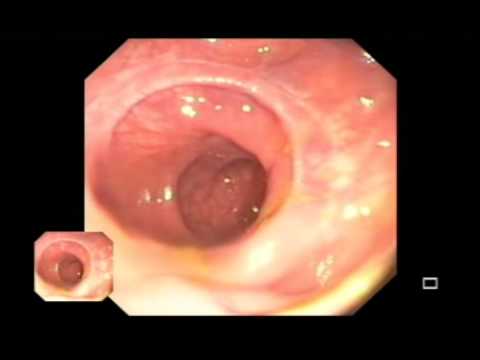
Normal End to End Anastomosis (eea) Stapled Colo-rectal...
This video demonstates the view of a end to end circular stapled colorectal anastomosis. The circular ring of white scar is the area of the anastomosis.

EFTR of Sigmoid Colon Polypectomy Base
Endoscopic video case: a 86/M with triple vessel disease + post PTCA with CCF-severe LVD, was admitted with bleeding PR. A colonoscopy was done - showed a short pedunculated polyp of <20mm at 25cms...

Colonoscopy in Less Than 2 Minutes
How to do the best and fastest colonoscopy in less than 2 minutes.

Ileocecal Valve
Clinical video case: the cecum is readily identified by the presence of the appendiceal orifice and the ileocecal valve. In certain cases, it may be necessary to examine the ileum and biopsy the terminal...

Melanosis Coli
Clinical video case: melanosis coli is a benign condition that causes black or brown discoloration of the colon wall. It usually occurs as a result of using anthraquinone laxatives. People with melanosis...

Laterally Spreading Tumor EMR in the Right Colon
Clinical video case: LST removed in the right colon. NBI imaging revealed no worrisome endoscopic features. The polyp was removed successfully using Endoscopic Mucosal Resection technique. HIstopathology...

Screening Colonoscopy
Video demonstrating (*brand hidden*) durability in screening colonoscopy in visualizing and resecting colon polyps.

- colonoscopy
- kolonoskopia
- colonscopy
Are you Health Professional?
Register now, join the community for free access.
GET ALL THE BENEFITS THAT MEDTUBE PLATFORM OFFERS:
- Unlimited access to the largest e-library of professional videos, images, publications, courses
- Connect with peers 450,000+ Healthcare Professionals from 180 countries
- Upload and share your own cases, ask questions and discuss
- Create your professional profile and build personal recognition worldwide
- Stay up-to-date with innovative techniques, treatments, guidelines, discoveries in your fields of interest; be notified
- You are informed about innovative treatments, techniques and innovations in medicine