Arthroscopy
Arthroscopy: Principles, Technical Evolution, and Clinical Applications
In the modern orthopedic paradigm, arthroscopy has transcended its origins as a diagnostic adjunct to become the definitive therapeutic gold standard for a vast array of intra-articular pathologies. Derived from the Greek arthro (joint) and skopein (to look), this minimally invasive surgical technique utilizes specialized endoscopes to visualize, diagnose, and treat disorders within the joint capsule. For the medical professional, arthroscopy represents a sophisticated synergy of optical physics, fluid dynamics, and precise surgical triangulation, offering significant advantages over traditional arthrotomy.
The Technological Ecosystem of the Arthroscope
The core of the arthroscopic system is the arthroscope itself—a rigid or semi-rigid fiber-optic conduit ranging from 1.9 mm to 4.0 mm in diameter. Modern systems utilize 4K high-definition (HD) sensors and xenon or LED light sources to provide high-fidelity visualization of the synovium, articular cartilage, and ligamentous structures. A critical component of the procedure is joint distension, typically achieved through continuous irrigation with sterile saline or Ringer’s lactate. This controlled fluid management system not only maintains an expansive operative field but also provides a "washout" effect, removing hemarthrosis and inflammatory debris to optimize the optical path.
Procedural Logistics and Portals
Access to the joint is established through strategic portal placement, which must be carefully calculated based on surface anatomy to avoid neurovascular compromise. The fundamental operative skill in arthroscopy is triangulation: the surgeon must maneuver the scope in one hand and specialized instruments—such as motorized shavers, radiofrequency probes, or basket forceps—in the other, converging their tips within a three-dimensional space while viewing a two-dimensional monitor. This requires a high degree of proprioceptive feedback and a steep learning curve for surgical residents.
Breadth of Clinical Indications
While originally popularized for the knee, arthroscopic capability now extends to nearly all major synovial joints. Key clinical applications include:
- Knee: Meniscectomy or meniscal repair, Anterior Cruciate Ligament (ACL) reconstruction, and chondroplasty.
- Shoulder: Rotator cuff repair, labral stabilization (Bankart repair), and subacromial decompression.
- Hip: Management of femoroacetabular impingement (FAI) and labral debridement or repair.
- Small Joints: Arthroscopy of the wrist, ankle, and elbow for loose body removal, synovectomy, and ligamentous repair.
Clinical Advantages and Complication Profiles
From a physiological perspective, the reduced surgical footprint of arthroscopy results in diminished postoperative inflammation and less disruption of the joint’s proprioceptive fibers. Patients benefit from decreased pain scores, lower rates of wound dehiscence, and an accelerated return to functional rehabilitation. However, clinicians must remain vigilant regarding specialty-specific complications, including fluid extravasation (which can lead to compartment syndrome in rare cases), portal-site infections, and iatrogenic articular cartilage damage.
The Future: Robotics and AI Integration
As of 2026, the field is witnessing a rapid integration of robotic-assisted arthroscopy and Augmented Reality (AR) overlays. These technologies allow for patient-specific anatomical mapping and real-time navigation during complex ligamentous reconstructions. Furthermore, the advent of Artificial Intelligence (AI) in diagnostic arthroscopy is assisting surgeons in the intraoperative grading of chondral defects and the objective assessment of repair stability, ensuring a future of high-precision, individualized orthopedic care.


Shoulder Arthroscopy
Shoulder arthroscopy: setup - positioning arthroscopic shoulder portal placement.

OrthoApproach - Shoulder Arthroscopy | Portals
This video provides a comprehensive overview of shoulder arthroscopy. Join the channel membership to unlock access to premium courses.

Tranexamic Acid in Arthroscopic Rotator Cuff...
Pooled data suggest that the use of TXA in shoulder arthroscopy does reduce postoperative shoulder pain and has a positive effect on decreasing operative time. However, the reduction in pain may not be...

Knee Arthroscopy: Setup, Positioning, Portal...
Surgical video: Knee arthroscopy: setup, positioning, portal placement, and fluid management.


Rotator Cuff Arthroscopic Repair
This video illustrates how an all-arthroscopic repair of a large rotator cuff tear is performed. This is an outpatient procedure done with regional anesthesia and a pain pump catheter is used to optimize...

Wrist Surgery - Scapholunate Ligament Repair
This video illustrates an all-arthroscopic technique for debridement and repair of a scapholunate ligament tear. Wrist ligament injuries are common but often overlooked and can only be definitively diagnosed...

Arthroscopic Anatomy of the Shoulder
This video delves into the intricate world of the shoulder joint, exploring its anatomy through the lens of arthroscopy. Embark on a visual exploration where you'll: - Gain a detailed understanding of...

Multidirectional Instability of the Shoulder...
Arthroscopic shoulder surgery video series performed by Bryan L. Reuss, MD, of Orlando Orthopaedic Center. This comprehensive, three part video series chronicles a patient of Orlando Orthopaedic Center,...
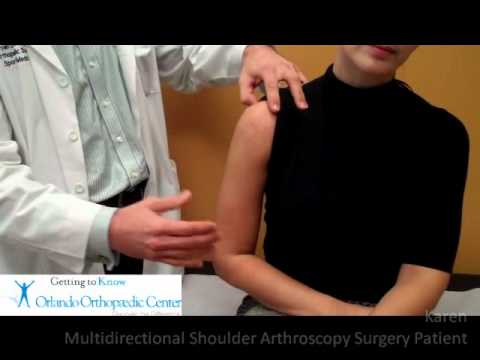
Multidirectional Instability of the Shoulder...
Arthroscopic shoulder surgery video series performed by Bryan L. Reuss, MD, of Orlando Orthopaedic Center. This comprehensive, three part video series chronicles a patient of Orlando Orthopaedic Center,...
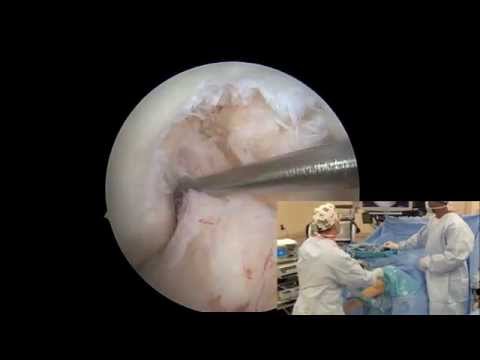
Partial Medial Meniscectomy
Orlando Orthopaedic Center's Dr. Randy S. Schwartzberg, a board certified orthopedic surgeon specializing in Sports Medicine, discusses what's involved with a Partial Medial Meniscectomy. The video shows...

Arthroscopic Posterior Labral Repair
Orlando Orthopaedic Center's Dr. Randy S. Schwartzberg, a board certified orthopaedic surgeon specializing in Sports Medicine, discusses what's involved with a Arthroscopic Posterior Labral Repair surgery....

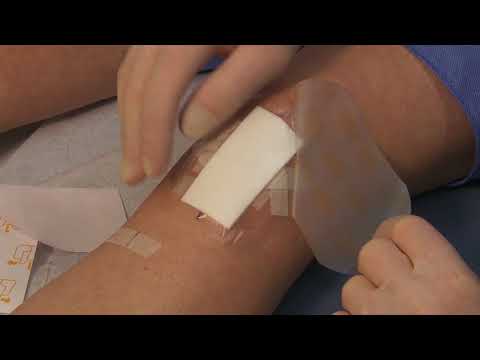
How to Apply Dressing After Knee Surgery | Knee...
Brian Davis, a Physician Assistnat for Dr. Peter Millett at The Steadman Clinic in Vail, Colorado, how to apply dressing after knee surgery. Following knee arthroscopy, you will have the following incisions....
Are you Health Professional?
Register now, join the community for free access.
GET ALL THE BENEFITS THAT MEDTUBE PLATFORM OFFERS:
- Unlimited access to the largest e-library of professional videos, images, publications, courses
- Connect with peers 450,000+ Healthcare Professionals from 180 countries
- Upload and share your own cases, ask questions and discuss
- Create your professional profile and build personal recognition worldwide
- Stay up-to-date with innovative techniques, treatments, guidelines, discoveries in your fields of interest; be notified
- You are informed about innovative treatments, techniques and innovations in medicine